Redesigning a Global Fast-Food App
UX/UI overhaul of a fast-food app and PWA serving 2M+ users across 4 countries. I redesigned ordering, loyalty, and the design system behind both platforms.
- Domain
- Food & Delivery
- My Role
- Product Designer (sole designer)
- Scope
- UX/UI Redesign, Design System, PWA
- Duration
- 1 year 7 months
Context
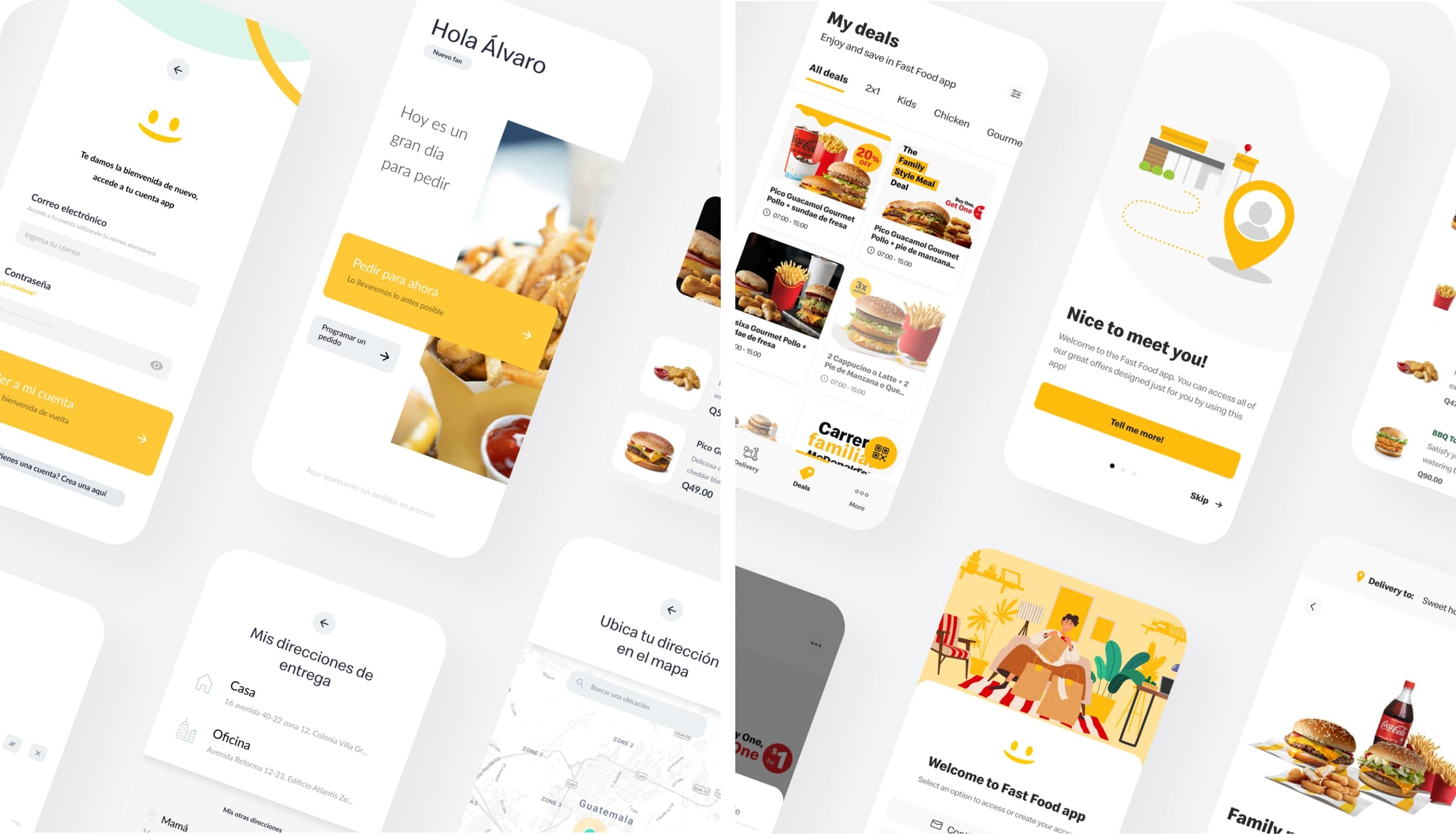
I redesigned the mobile app and progressive web app for a global fast-food brand across Guatemala, Honduras, Nicaragua, and El Salvador. The app serves over 2 million active users. The existing app had an outdated interface, confusing navigation, and no personalization. Ordering felt harder than it should. I redesigned the complete experience: simplified ordering, introduced a loyalty system, and built a unified design system for both native and web platforms.
What I did
- 01Redesigned the ordering flow, the highest drop-off point in the app
- 02Designed one account carrying points, orders, addresses, and payment methods across web, mobile, and 4 countries
- 03Built a Deals section that connects app promotions to in-store redemption
- 04Designed one UI kit serving native apps and PWA across 4 countries
- 05Rebuilt navigation from a cluttered menu to four sections
Problem
Three core problems identified through analytics review, app store feedback, and client stakeholder sessions:
Research
Research was conducted in close collaboration with the client's product and marketing teams, who provided access to user analytics and regional feedback.
Sources: Customer support reports, app store reviews, usage analytics across 4 countries, stakeholder interviews.
What the data revealed:
Ordering flow
The old app had too many routes to the same action, and ordering was the highest drop-off point. I rebuilt the IA so each screen does one thing, and cut navigation to four sections: Home, Delivery, Deals, More.
Ordering became linear. Delivery and pickup stay separate paths, but the duplicate routes are gone.
Key Features
Home built around what people actually open the app for
Why: Analytics showed three things dominated: favorites, recent orders, and current promotions. Home leads with those instead of a full menu.
One account across every device and country
Why: Someone orders on their phone this week and on the web the next. If points and saved addresses live on the device, loyalty only works for people who never switch phones. The account carries the state instead: points, order history, addresses, payment methods.
Enhanced profile and navigation
Profile redesigned for quick access to order history, loyalty status, and saved addresses. A sidebar handles secondary features, keeping the bottom navigation clean and focused.
Personalized deals
A dedicated Deals section surfaces promotions based on order history, including hidden deals and scannable coupons tied to physical marketing campaigns.
Give every deal a second way to redeem
A deal is worthless if the customer can’t redeem it at the counter. Scanning fails often enough that it can’t be the only way in.
Considered
QR only
Simpler to build and faster at the counter when it works. But a scan that fails leaves the customer with a deal they can see and can’t use, in front of a queue.
Chose
Every deal carries both a QR code and a spoken code
The QR scans at the counter, integrated with the restaurant’s POS, so redemption needs no conversation with staff. When scanning isn’t possible, a screen too dim, a scanner that won’t read it, a phone handed to someone else, the customer reads the code out instead. Same deal, two ways in, and neither depends on the other working.
UI Kit
Built a unified UI Kit aligned with the brand's global identity, used across both native app and PWA.
- Official brand typography and color palette for instant recognition
- Modular component library of cards, buttons, and inputs, ensuring consistency across 4 country variants
- Branded avatars and icons adding personality without sacrificing clarity
- WCAG-compliant contrast, larger touch targets, clear visual hierarchy
PWA
The team built a progressive web app alongside the native app. I designed both from the same system, mirroring functionality across platforms. This expanded reach to users with limited device storage or older smartphones, a common scenario in the Central American market.
Results
Users reported the app “finally felt like it matched the brand they knew.”
Other Works
Healthcare · Matchmaking · B2B + B2C · Web + Mobile
Mental Health Marketplace
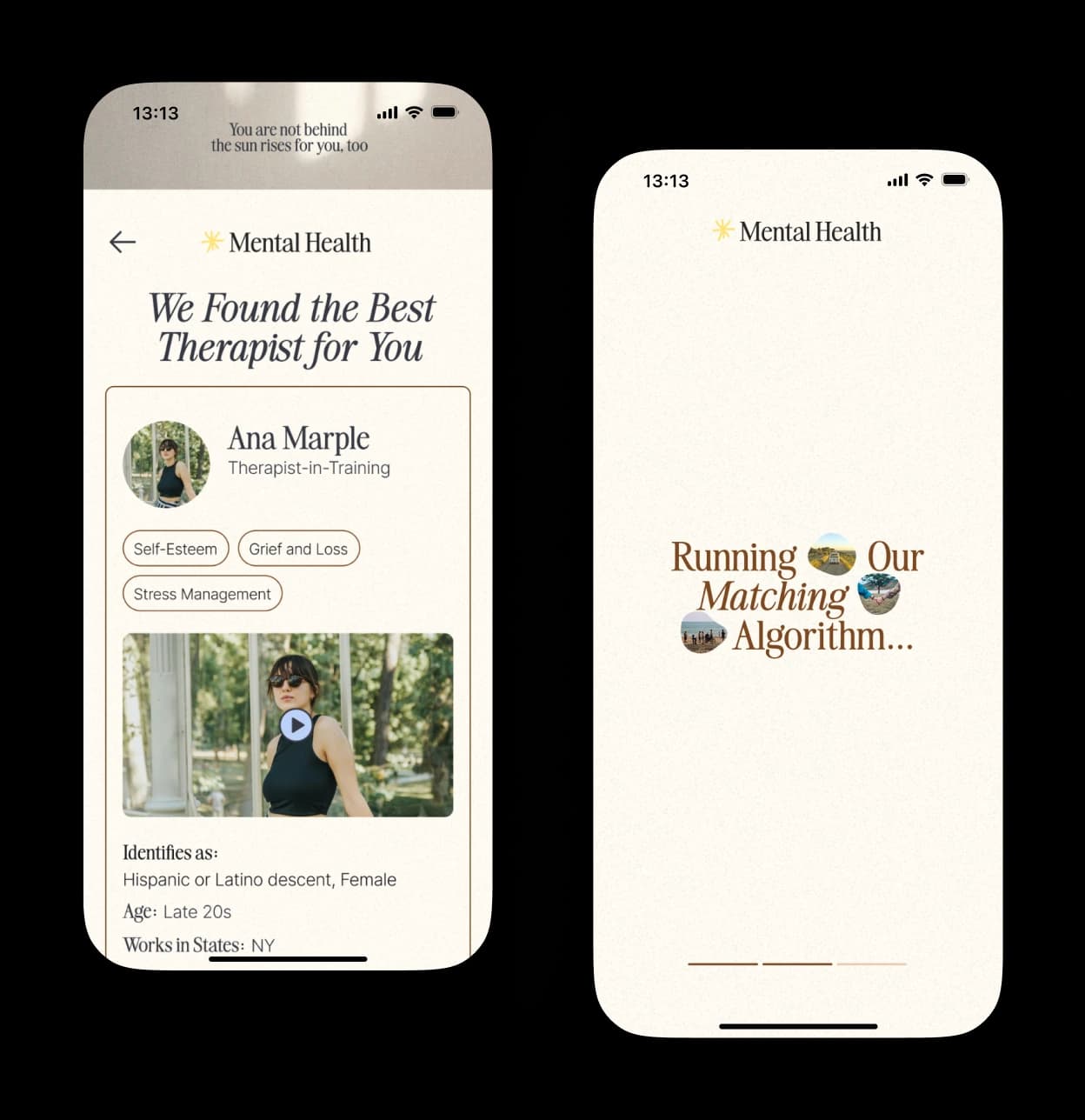
Coordinators spent up to 24 hours matching each patient to a therapist. I redesigned matching and booking so it takes under 2 minutes, and no-shows dropped by about half.
Foodtech · ERP · B2B · Web + Mobile
B2B Platform for a Multi-Country Franchise
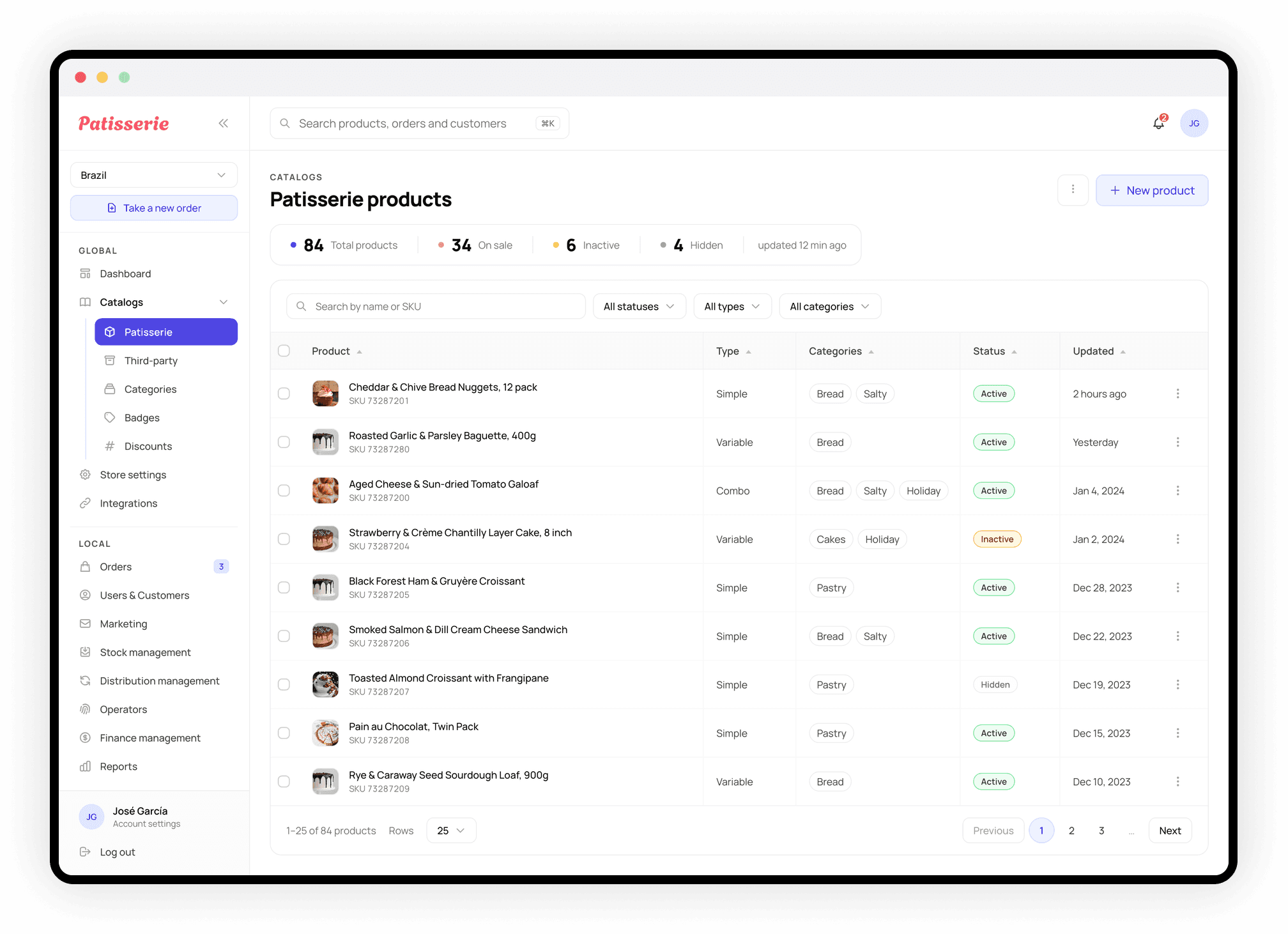
A bakery franchise across 4 countries outgrew its basic admin panel. Over 2 years I turned it into a full ERP, 15+ modules, as the only designer.