MedBase: Medical Content Marketplace
A two-sided medical content marketplace. I redesigned the public platform, then designed the B2B portal that turned it into a business.
- Domain
- Healthcare, MedTech
- My Role
- Product Designer
- Scope
- Research, UI/UX Design, Design System
- Duration
- 8 months
Context
MedBase is a two-sided medical content platform. Doctors publish verified health knowledge as video articles. Medical representatives write about the technologies they sell, and through the PRO Portal, commission doctors to write about them too. I worked on both sides over 8 months. First a full redesign of the public platform, which brings in readers and doctors. Then the PRO Portal, where reps order content from those doctors. The redesign built the audience. The portal made it earn.
What I did
- 01Ran a UX audit and user testing to find why the platform read as untrustworthy
- 02Redesigned the public platform across web and mobile, 100+ screens
- 03Rebuilt the doctor content creation flow, 45% faster in testing
- 04Designed the PRO Portal, the platform’s first revenue stream
- 05Built one design system covering both products
Initiative 1: Website Redesign
Problem
The client needed to increase user acquisition and strengthen brand trust. Through a UX audit and user testing, I identified core issues:
The key task was narrow: read an article, then click through to an external link. That click is how the platform would eventually make money from paid traffic, so everything in the redesign pointed at it. Users could complete it, but told us the interface felt untrustworthy, which is a problem when the ask is “now click this link.”
Research Approach
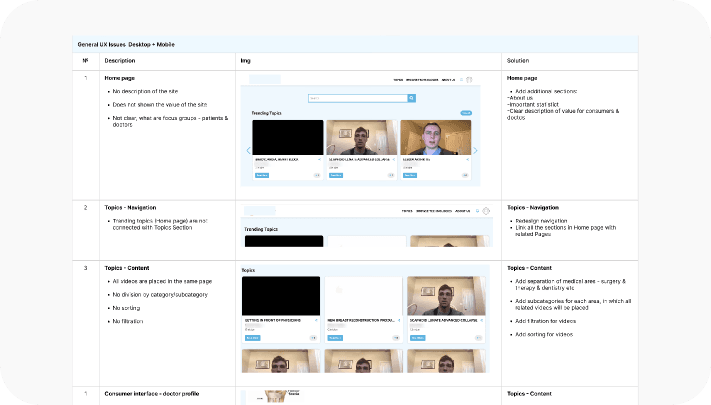
I conducted an expert UX review and user testing with potential users. Without access to analytics, I relied on qualitative signals. I documented all issues to create a prioritized redesign roadmap.
Solution
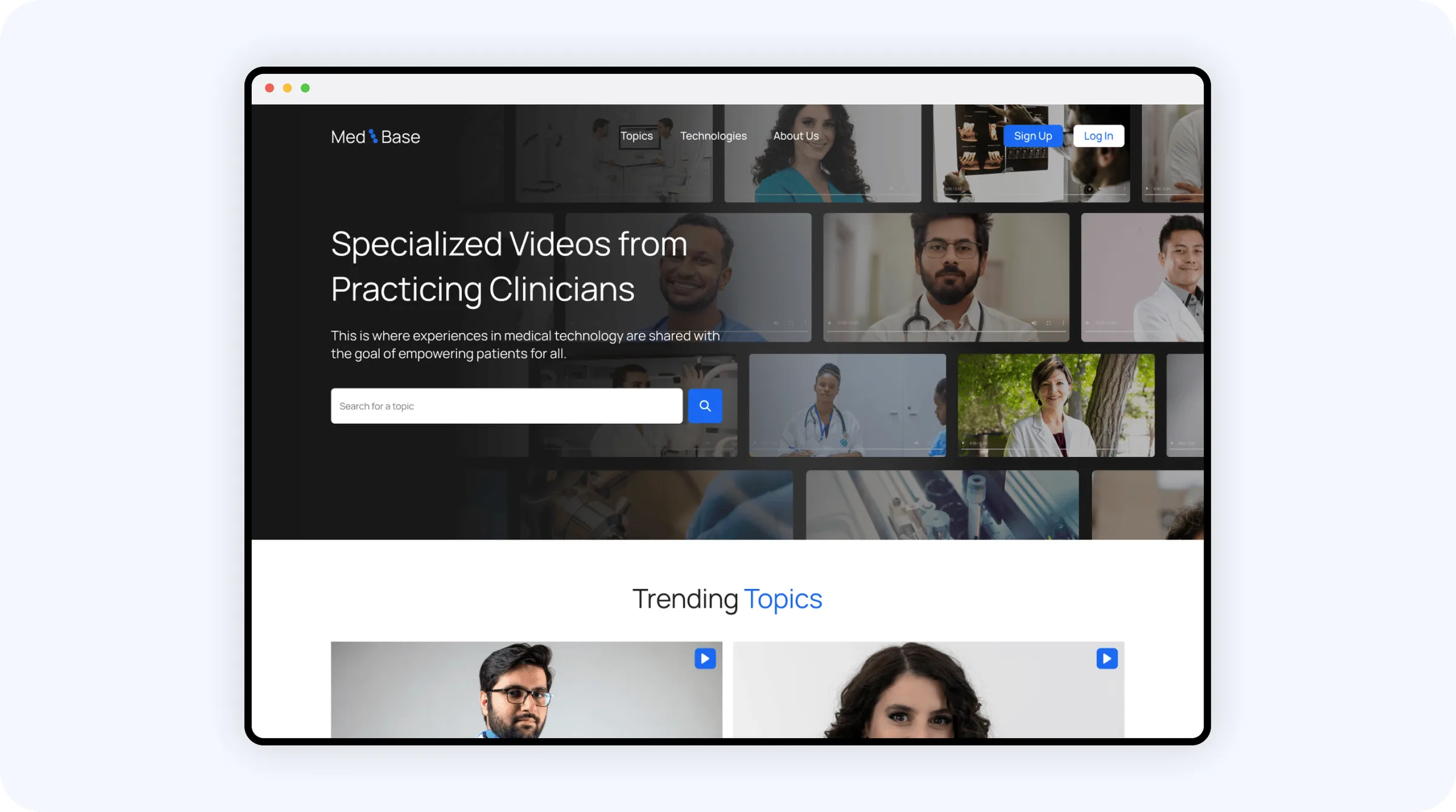
Rebuild the homepage around credibility, not features
Why: The audit said the problem was trust, not usability. People could find things, they just didn’t believe what they found. So the homepage leads with who publishes here, practicing clinicians credited on every card, instead of leading with content volume.
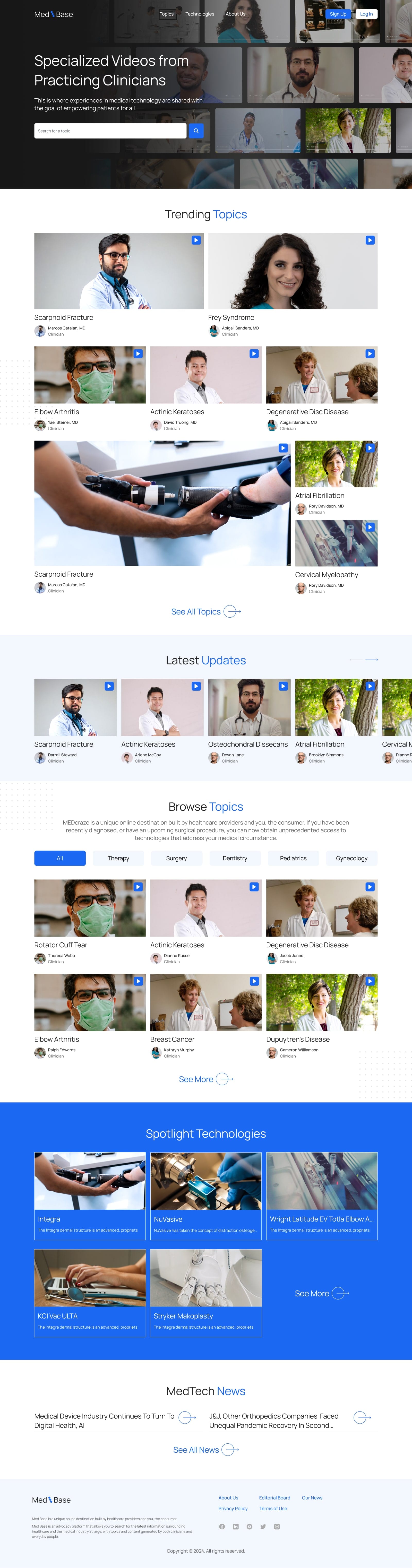
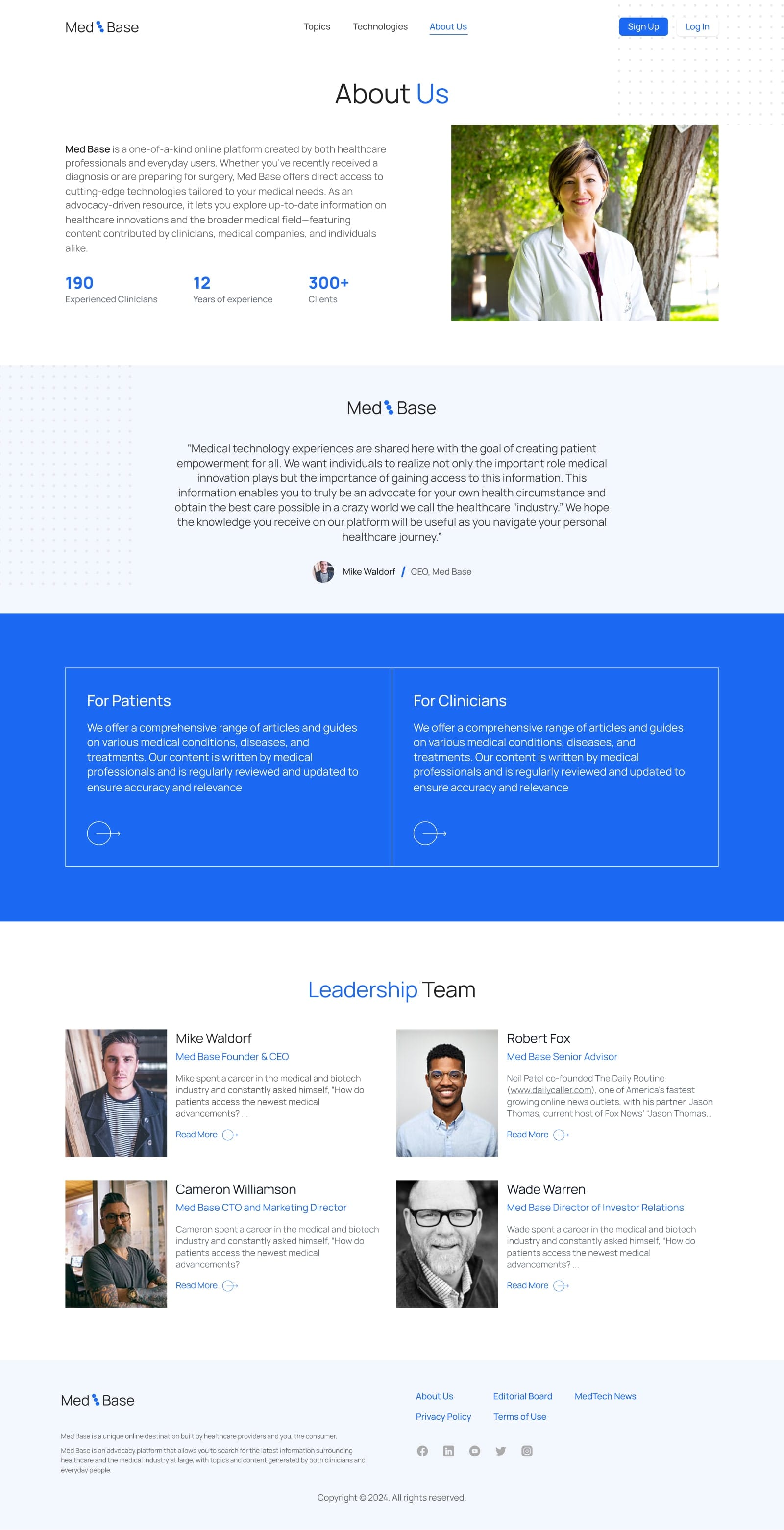
Use the About page to answer “who are these doctors”
Why: Trust on a medical platform comes down to the credentials behind the content. The old page said nothing about that.
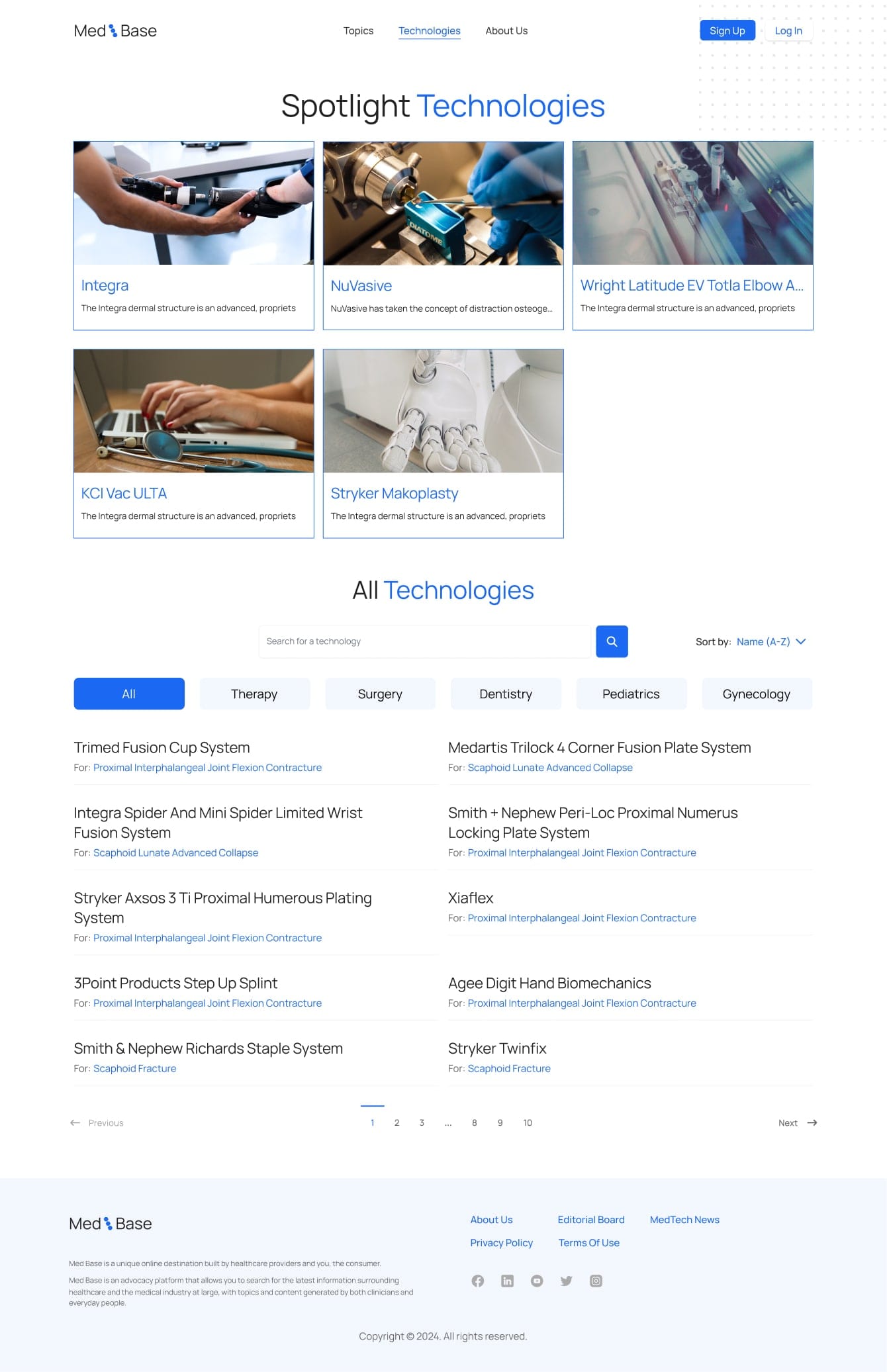
Add filtering and sorting to a flat content library
Why: Everything sat in one undifferentiated list. Categorization, filters, and sort let people find content by topic instead of scrolling.
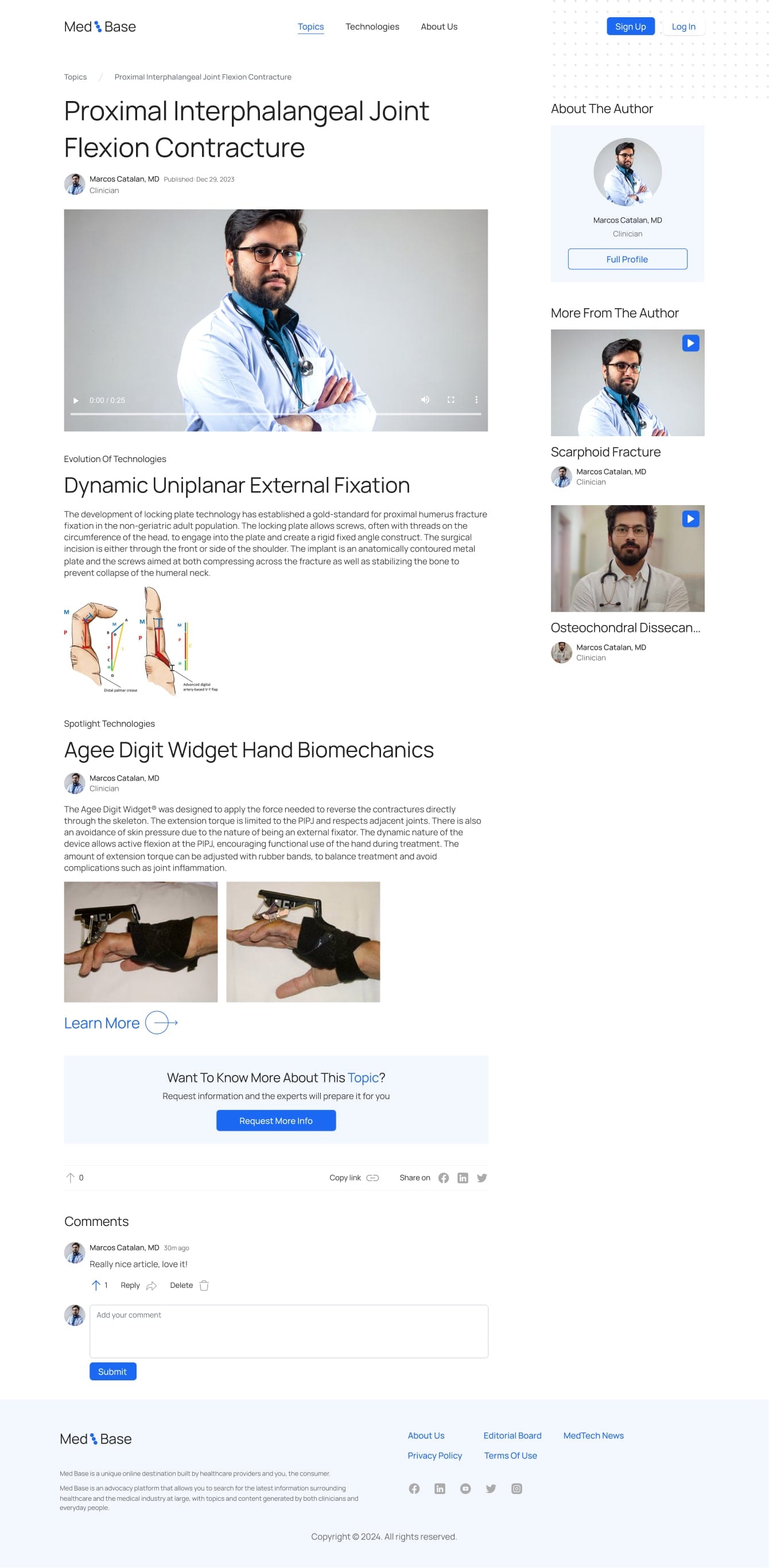
Show the topic and technology link
An article is a topic plus technology descriptions. Technologies are browsable on their own too, but a technology can only exist inside a topic, and nothing on screen said so.
Considered
Leave technologies as standalone entries
Matches how people browse, but hides the parent and gives the writer no way to reach it.
Chose
Add a Linked topic section to every technology page
The technology keeps its own entry point and gains a link back. The rule becomes visible instead of implied.
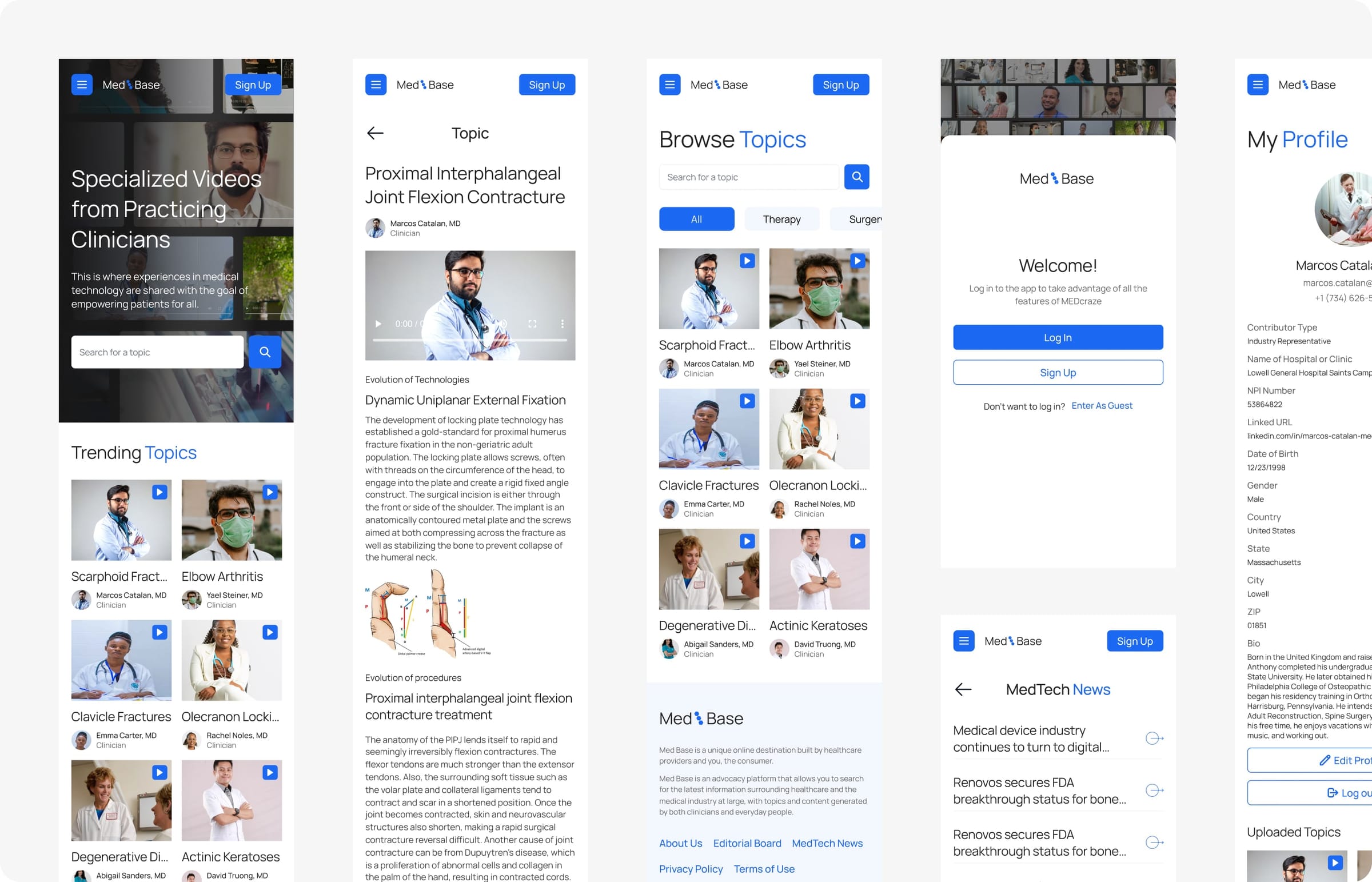
Align mobile with web instead of designing it separately
Why: Navigation differed between platforms, so people who used both had to relearn the product. These screens keep the web’s structure, with the layouts adapted to small ones.
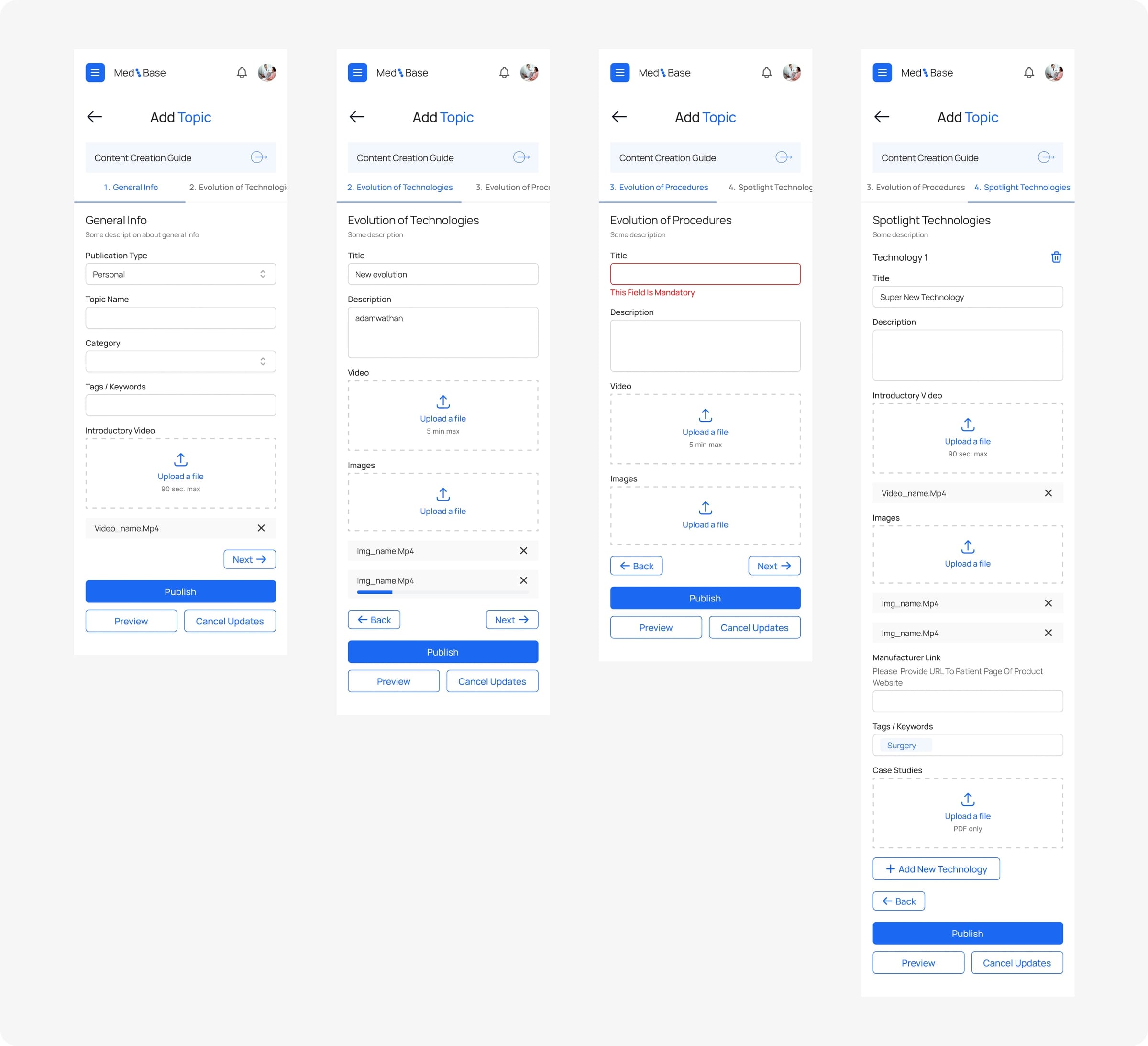
Break content creation into steps
Why: Doctors are not full-time content producers. One long error-prone form was the biggest thing standing between the platform and more articles. Step-based navigation, fewer required fields, inline help, standardized validation. 45% faster in testing.
Redesign Results
- Modernized UI increased perceived trust (confirmed by user surveys)
- Content creation flow 45% faster
- Consistent cross-platform experience for web and mobile
- 100+ screens designed including all states and interactions
Initiative 2: PRO Portal
Problem
Before the portal, publishing was self-directed. Doctors wrote for visibility, on their own initiative. Industry representatives wrote about the technologies they represent, which is advertising with the vendor’s name on it.
Nothing connected the two. A representative who wanted a doctor’s voice behind a product had to wait for one to write about it, or write it themselves and carry the credibility cost of being the seller. The PRO Portal closed that gap: reps commission topics and technology descriptions from doctors directly, and the content publishes into the same library everyone already reads.
PRO sits alongside the existing flow rather than replacing it. Doctors and reps still publish on their own whenever they want. The portal is for the cases where a rep needs a doctor’s voice specifically, and is willing to pay for it.
PRO Portal commissioning flow: the business rep orders content. The doctor applies to a public offer or accepts a private offer, then writes the content and submits versions. The rep reviews it and either declines it for revision or publishes it, going live and open to ad placement.
Business rep, PRO portal
1Orders content
Brief, placement, deadline, price
Doctor, Main portal · option 1 of 2
2Applies to a public offer
Doctor, Main portal · option 2 of 2
2Accepts a private offer
Doctor, Main portal
3Writes content
Submits versions
Business rep, PRO portal
4Reviews
Declines or publishes
Business rep, PRO portal
5Live
Open to ad placement
Working under a moving scope
Requirements shifted several times during the PRO Portal. Scope changed, features moved in and out, and the shape of the product was not settled when design started.
Considered
Design in high fidelity as usual
Faster to approve when the scope holds, and stakeholders react better to something that looks finished. But every scope change would have meant rebuilding screens that were already done.
Chose
Iterate in wireframes, commit to visuals late
Cheaper to throw away. Stakeholders reviewed structure without arguing about color, and the visual pass only started once the flows stopped moving.
Solution
Give PRO its own theme on the same design system
Why: Reps and doctors move between a free public platform and a paid commercial tool. A dark theme makes it obvious which one you’re in, and building it on the same components meant the split cost almost nothing to maintain.
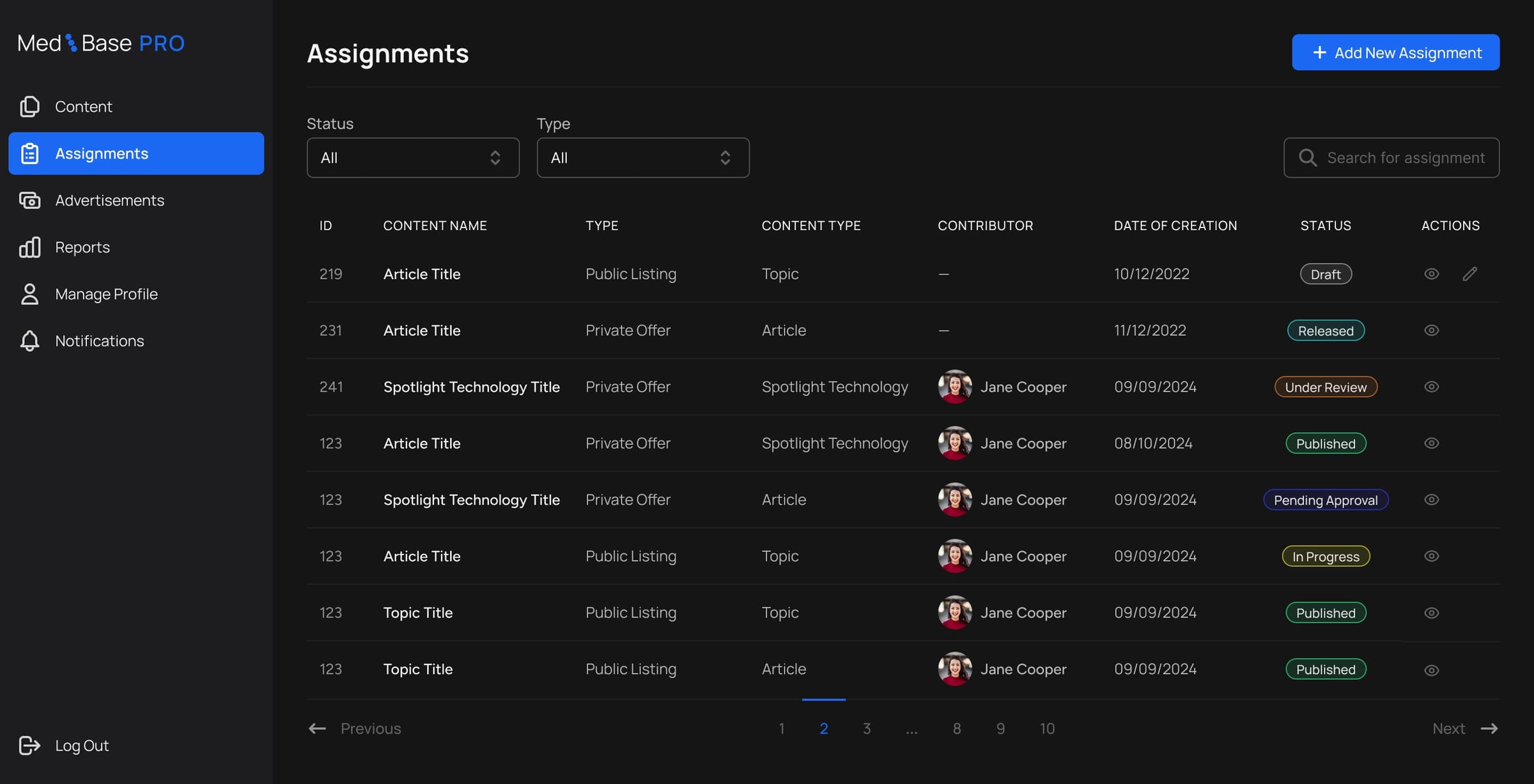
Put every assignment in one view
Why: Reps needed to see what’s in progress, what’s under review, and what’s published without hunting across screens.
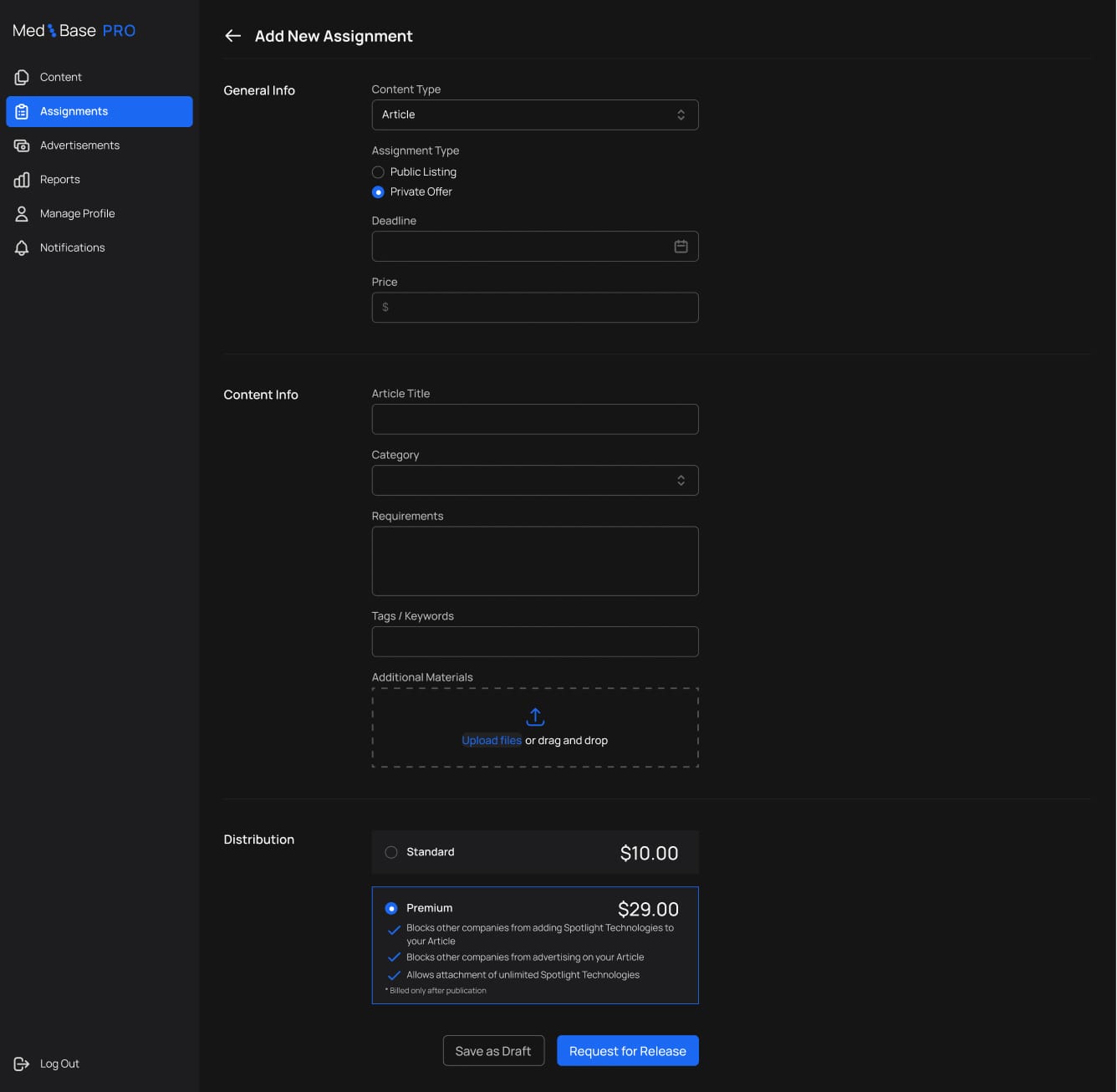
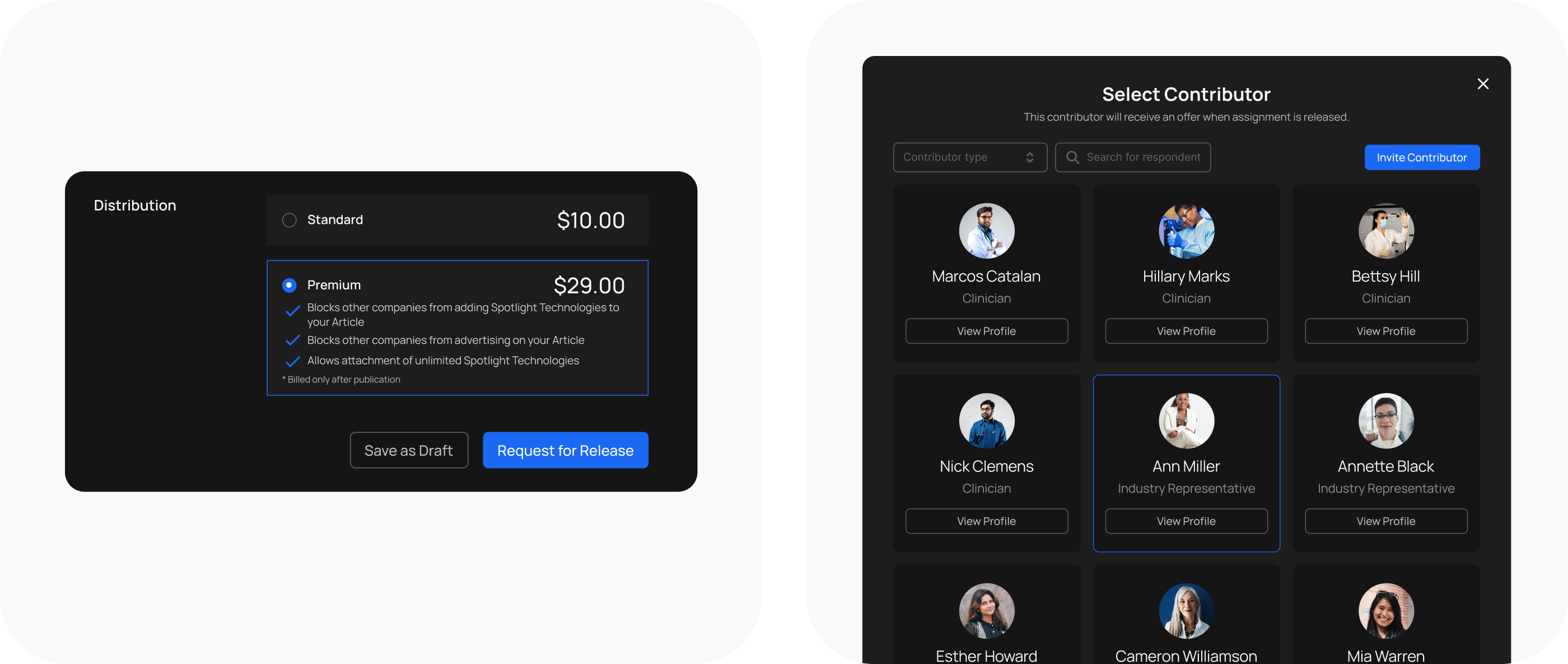
Group the order form by decision, with visibility and tier as explicit choices
Why: Public or private, standard or premium. Four combinations with different implications, so the form separates the terms of the deal from the brief and from what distribution costs.
Keep doctors on the main site instead of sending them to PRO
Why: Doctors are the supply side of the marketplace, but they already live on the main platform. Making them log into a second product to see assignments would have cost the platform its writers. So assignments arrive as a new tab where doctors already are.
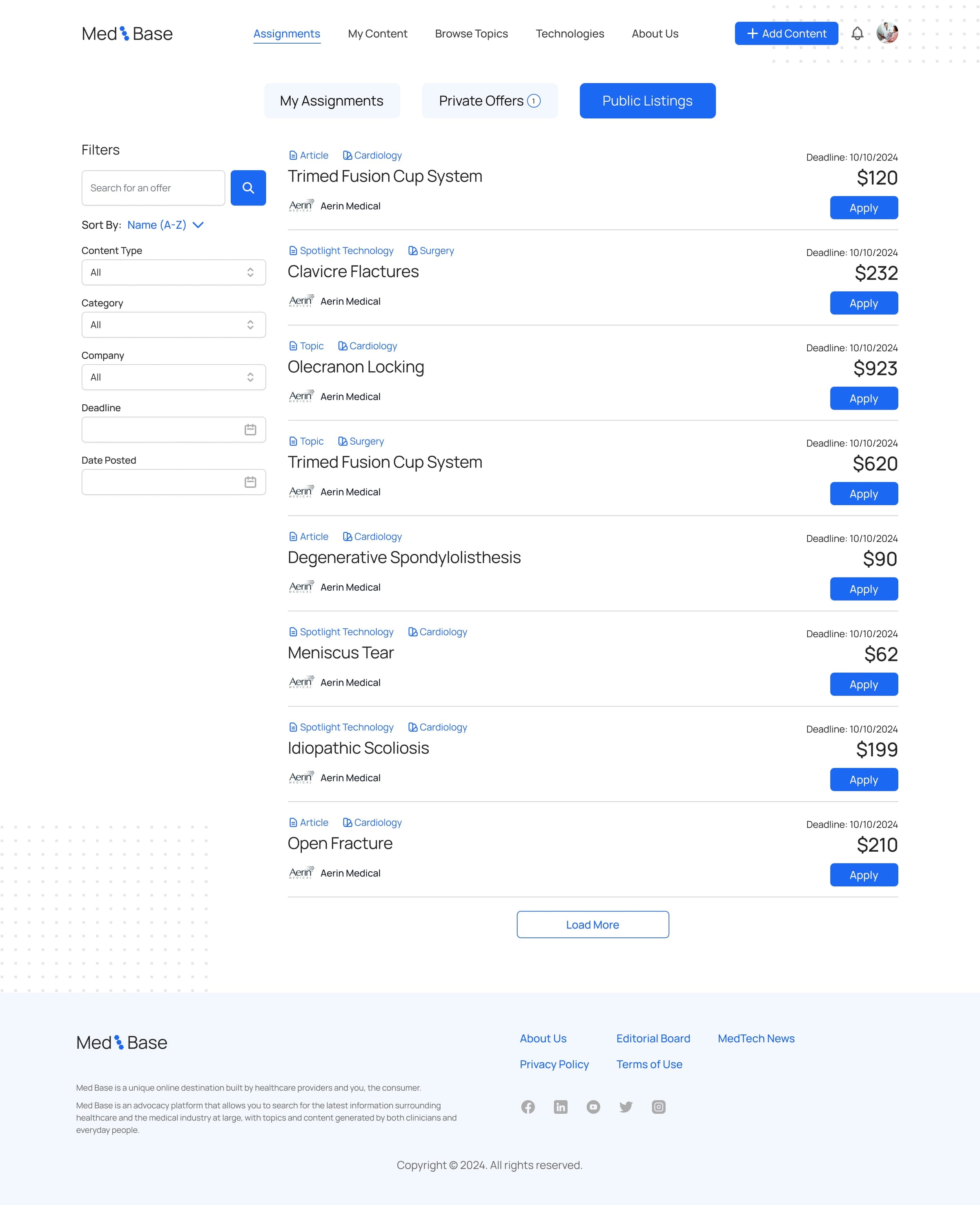
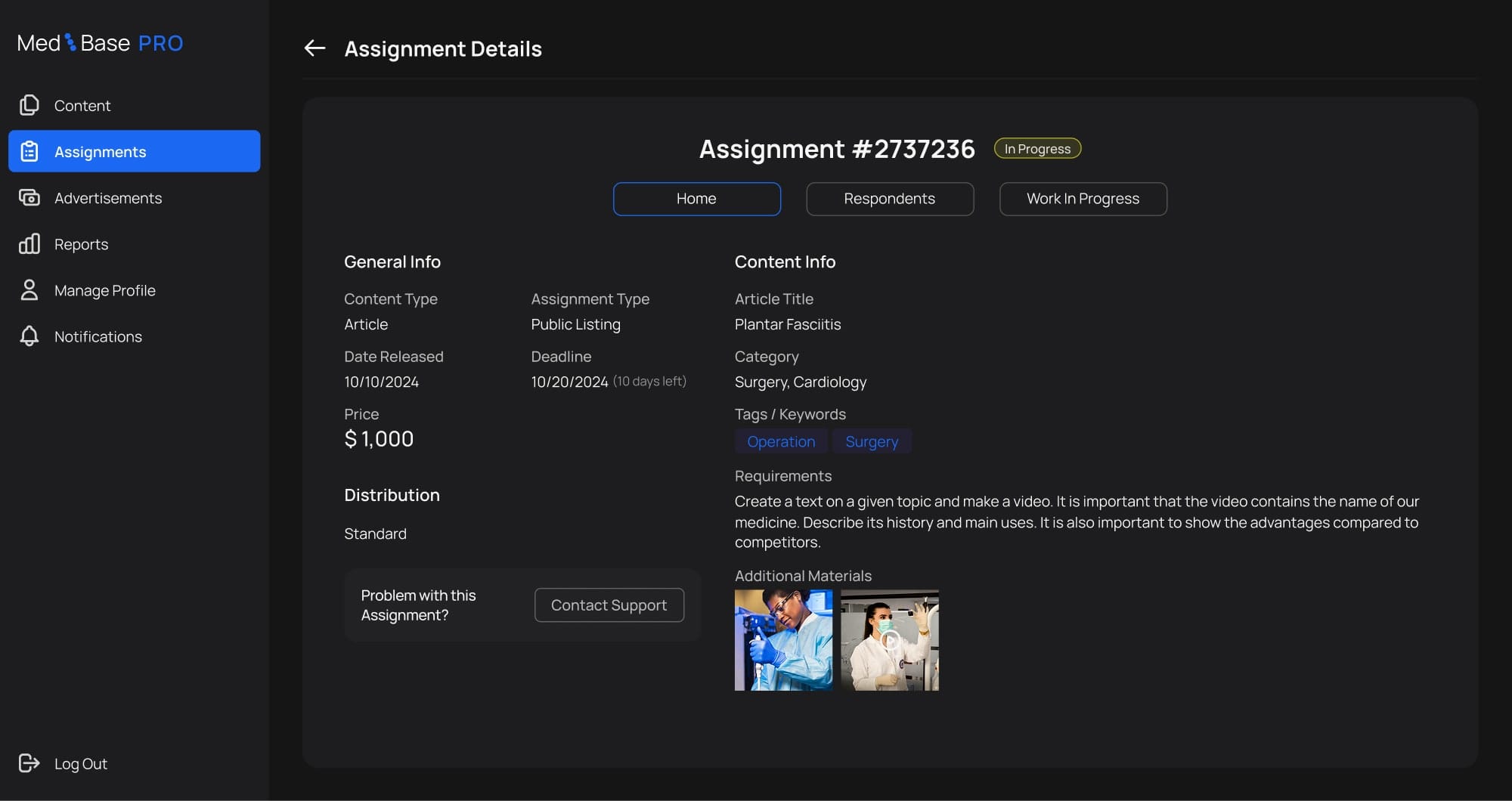
Put the assignment’s terms on one screen
Why: A rep checking on work in progress needs the brief, the deadline, the price and the materials they supplied. General info and content info sit side by side, with support one click away when something is wrong.
PRO Portal results
- Introduced the platform's first monetization model
- Integrated with existing platform without disrupting the user experience
- The portal launched after I left the project and is live now
The scale of it
- 8
- months
- 2
- initiatives
- 100+
- screens
- 45%
- faster content creation
Other Works
Healthcare · Matchmaking · B2B + B2C · Web + Mobile
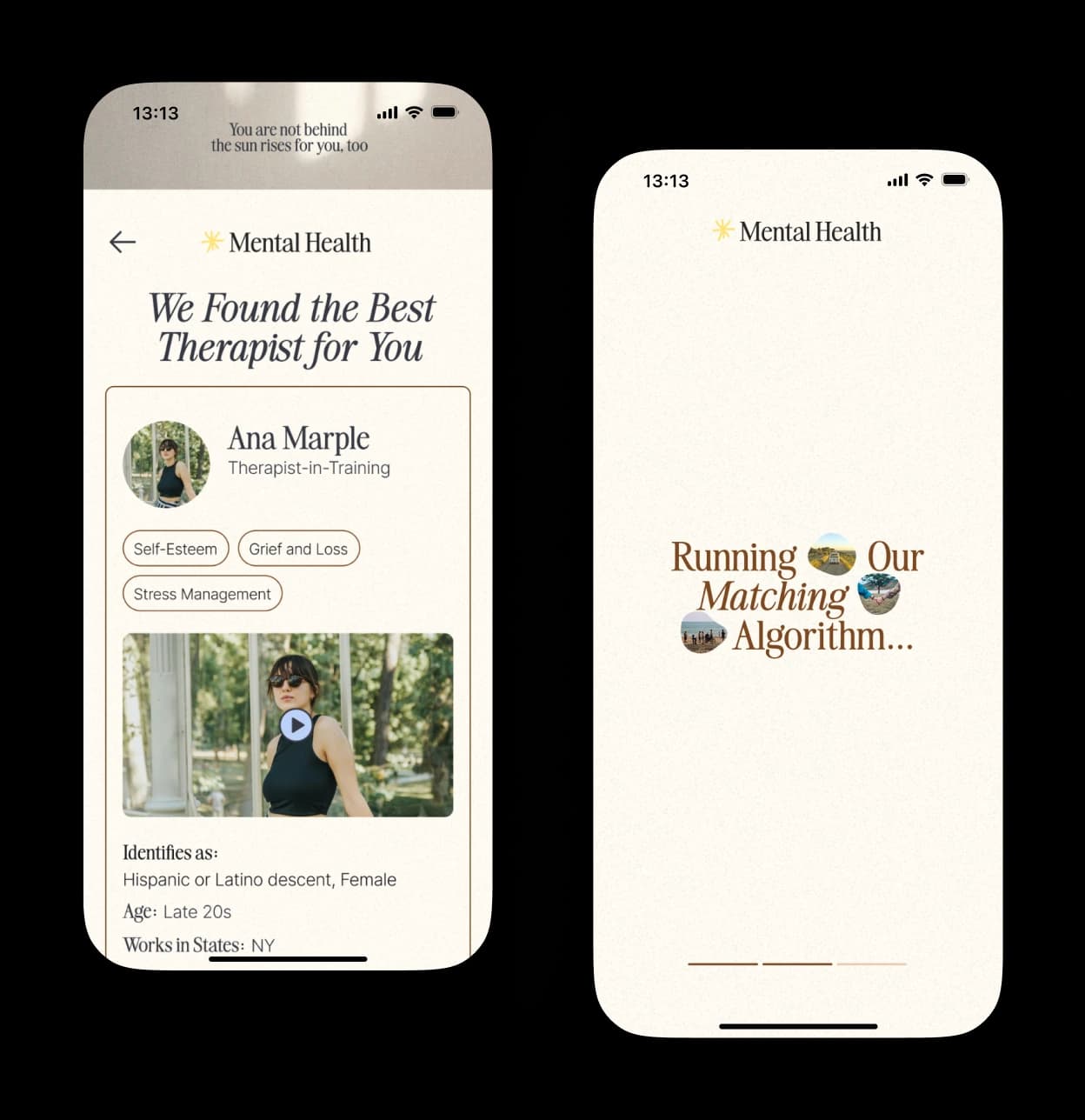
Mental Health Marketplace
Coordinators spent up to 24 hours matching each patient to a therapist. I redesigned matching and booking so it takes under 2 minutes, and no-shows dropped by about half.
Foodtech · ERP · B2B · Web + Mobile
B2B Platform for a Multi-Country Franchise
A bakery franchise across 4 countries outgrew its basic admin panel. Over 2 years I turned it into a full ERP, 15+ modules, as the only designer.