From Match to Mind: Rethinking Mental Health UX
Replacing a manual therapist matching process with an algorithm, then building the custom EHR the clinical team ran on.
- Domain
- Healthcare
- My Role
- Product Designer, UX Researcher
- Scope
- Research, Visual Design, Prototyping, Testing
- Duration
- 5 months
Context
A mental health platform was struggling with a manual matchmaking process: patients had no control over therapist selection or scheduling, ~20% missed their first session, and ~30% didn't book a second one. Coordinators spent up to 24 hours per match. Alongside this, therapists were stuck with an overloaded, expensive third-party tool that didn't fit their workflow.
What I did
- 01Conducted competitive analysis of 9 mental health platforms
- 02Led 6 user interviews with therapists and supervisors
- 03Redesigned therapist matchmaking, from manual to algorithmic
- 04Designed custom EHR system across 3 user roles (60+ screens)
- 05Defined new visual identity and delivered brand book
- 06Facilitated stakeholder alignment and usability testing
Part 1 — Matchmaking
Problem & Context
The therapist matchmaking process was entirely manual: coordinators reviewed client forms and selected therapists based on selected preferences, therapist at their own judgment. A patient filled in a questionnaire, waited up to 24 hours for a coordinator to pick someone, then received an email with a therapist they had never seen and a time they had not chosen.
Research
Competitor Analysis
To evaluate market solutions, I performed a competitive analysis of 9 leading mental health platforms. Key findings:
6of 9
Clients get no say in who they are matched with. The platform assigns.
2of 9
Let clients both choose their therapist and see full profiles before booking.
3of 9
Offer full customization of matching parameters.
2models
Dominant matching models: questionnaire plus algorithm, or search and browse. The rest are specialist-review variants.
User Research
We've conducted a series of interviews for the second part of the project work, but in addition we asked some questions that were also related to the matchmaking functionality. Key insights included:
- The manual process was technically awkward. Coordinators had to switch between three different platforms to reconcile data.
- Matches often lacked confidence and alignment
- Patients wanted more control and transparency
- The first call's scheduling had a major impact on therapy engagement
“I don't know anything about my therapist before the first call. I just get an email with a time, and honestly, if it doesn't feel right, I probably won't book a second session.”
“The whole process is really time-consuming. I have to manually cross-reference patient questionnaire answers with therapist parameters across multiple platforms just to make a single match.”
Solution Overview
Diagram comparing the therapist matching process before and after the redesign. Both processes start with the same patient questionnaire and end with the same confirmation email; only the three steps between them changed. Before: manual coordinator review taking 24 hours, an assignment the patient never saw, and a session slot the therapist picked. After: an algorithm taking under 2 minutes, a therapist profile the patient can review and rematch from, and self-booking.
Before, manual
After, automated
Questionnaire
Patient fills form
- BeforeManual review24 hours
- BeforeAssignmentPatient not shown therapist
- BeforeForced slotTherapist picks time
Email
Patient notified
- Questionnaire
- AfterAlgorithm<2 min
- AfterProfile shownRematch possible
- AfterSelf-bookingPatient picks time
Algorithmic Matching
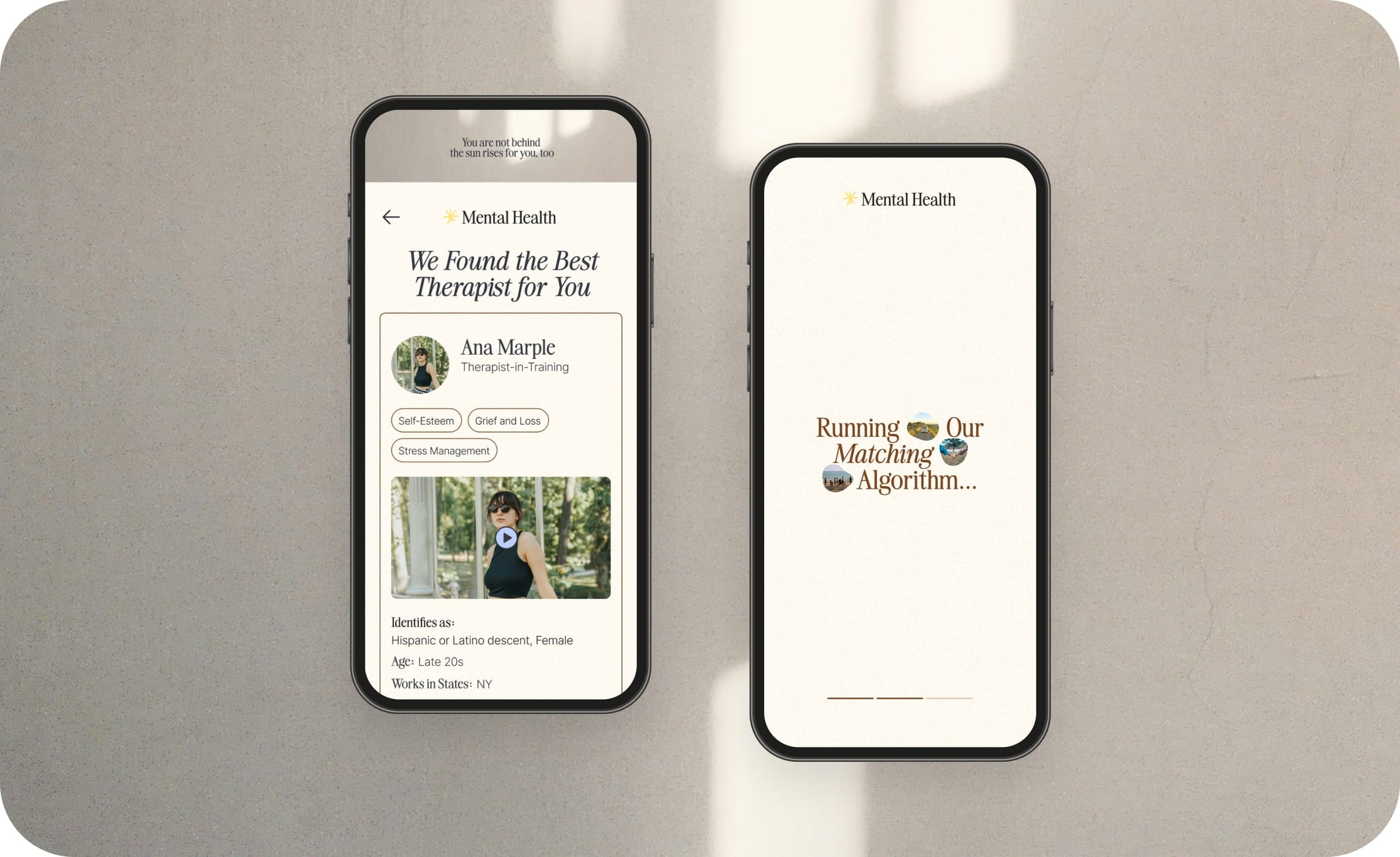
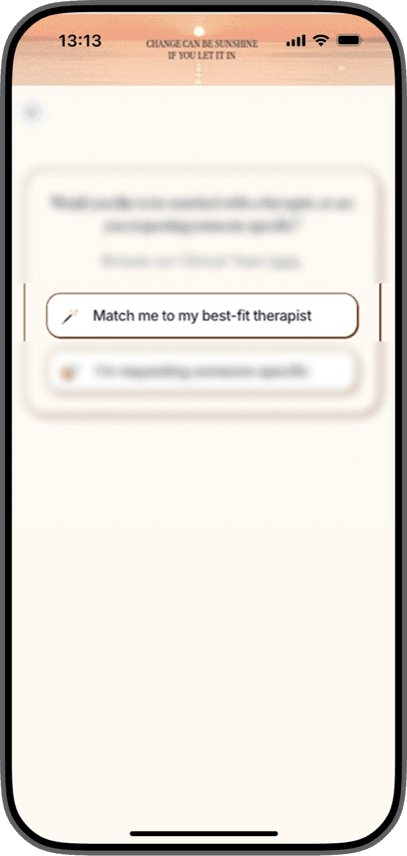
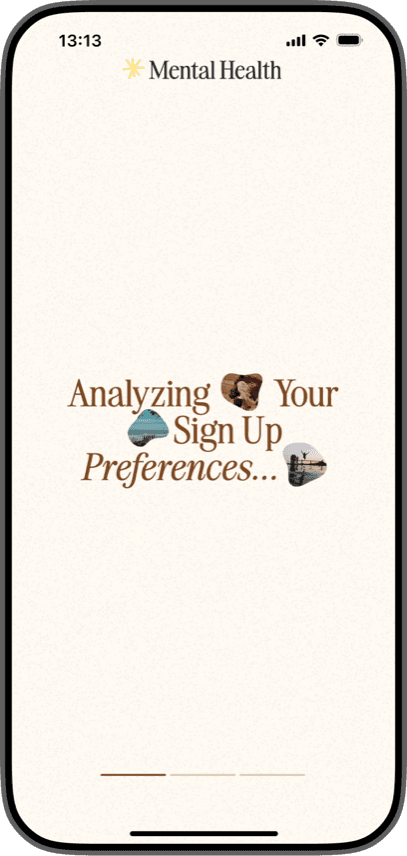
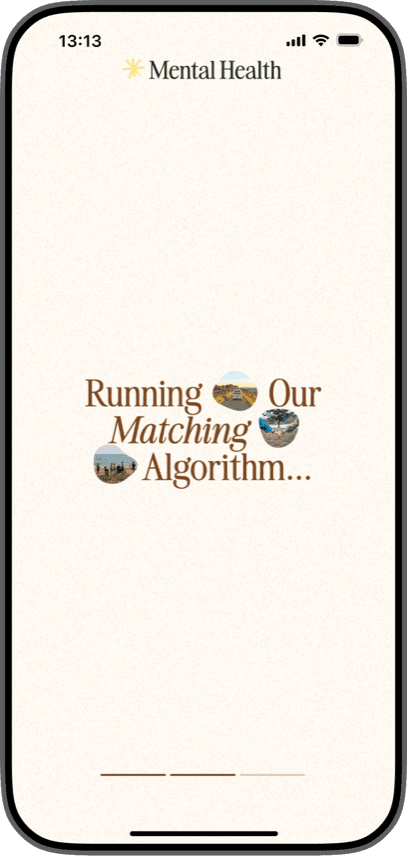
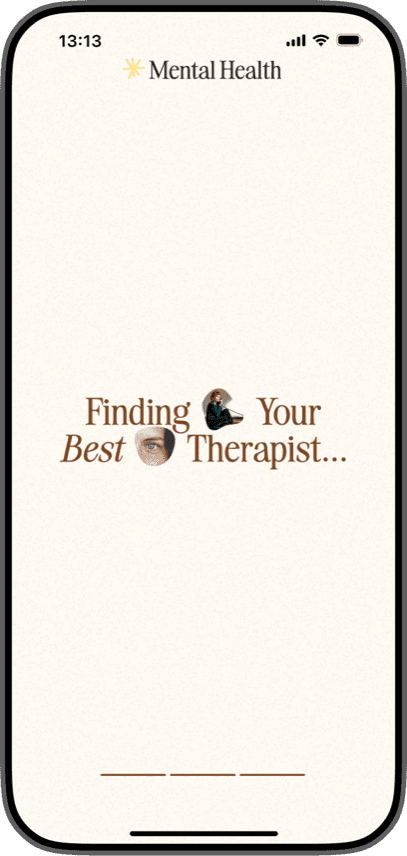
I introduced an automated matching algorithm that processes the patient's questionnaire responses and therapist preferences (such as therapy type, therapist gender, experience, etc.) to suggest the most suitable therapist.
I used a mobile-first approach, since according to statistics the vast majority of users filled out the questionnaire from their phones.
Solved problem: Manual coordinator review took about 24 hours per match. The algorithm does it in under 2 minutes.
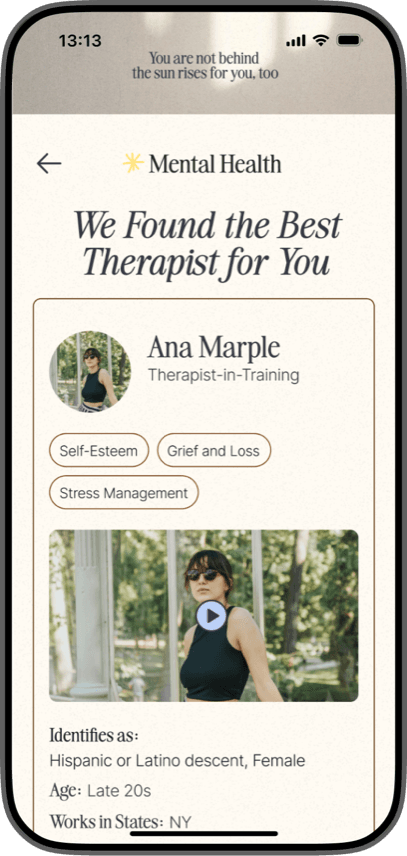
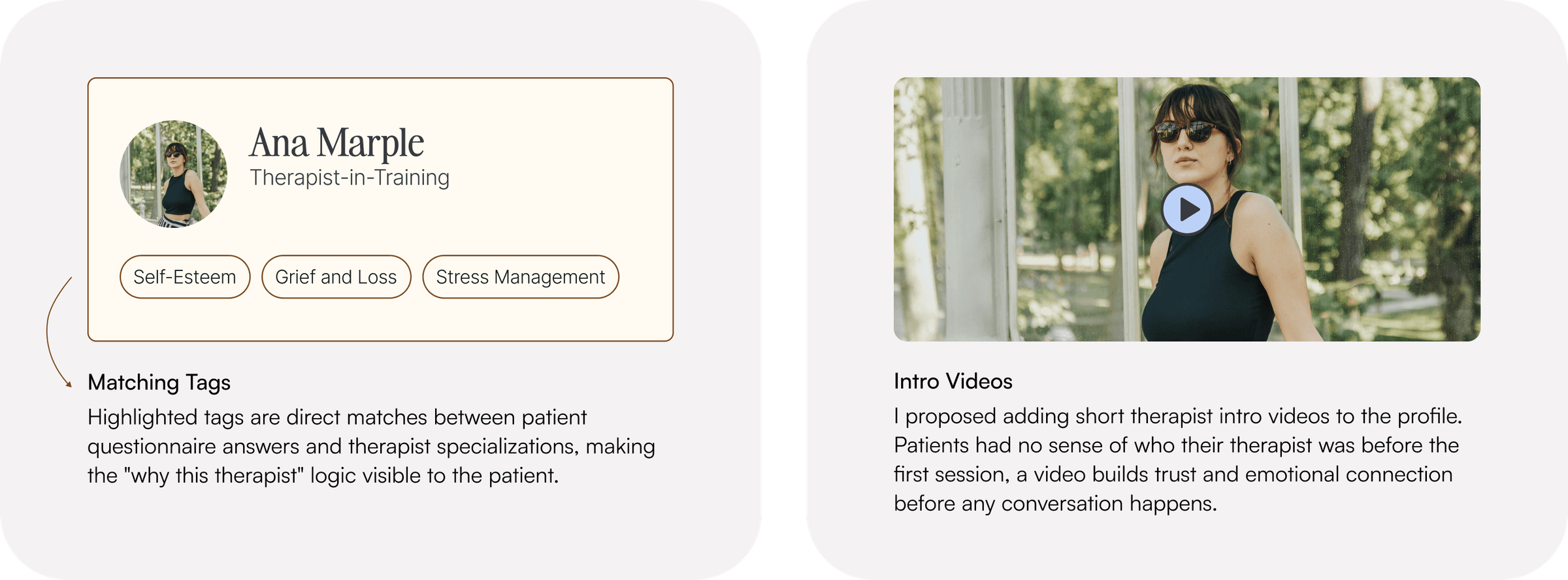
Therapist Profile Page
The system presents the matched therapist with a detailed profile to help the patient make an informed decision.
Solved problem: Clients had no say in therapist selection. Now they get full profile transparency, with the ability to rematch and compare previous results.
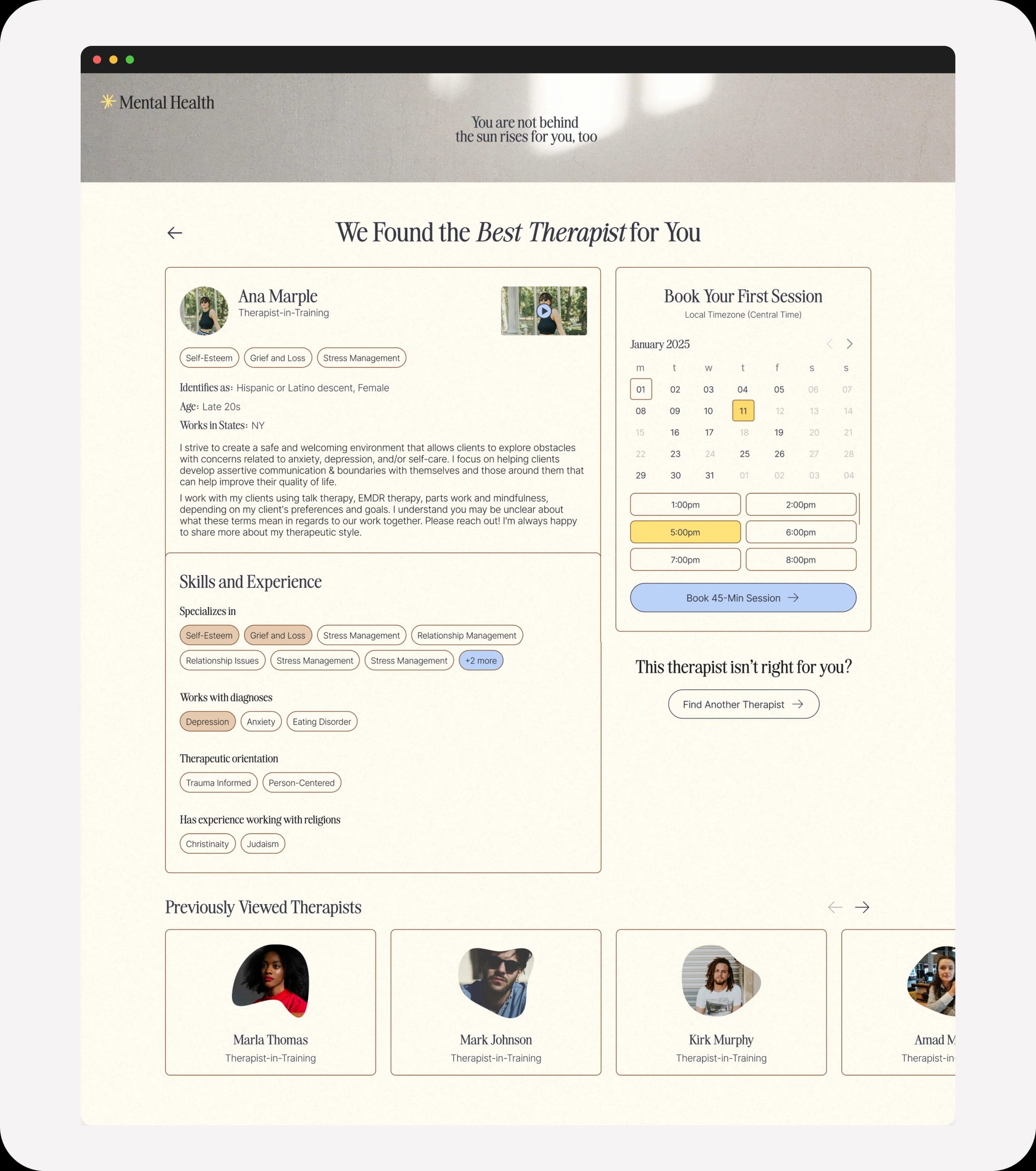
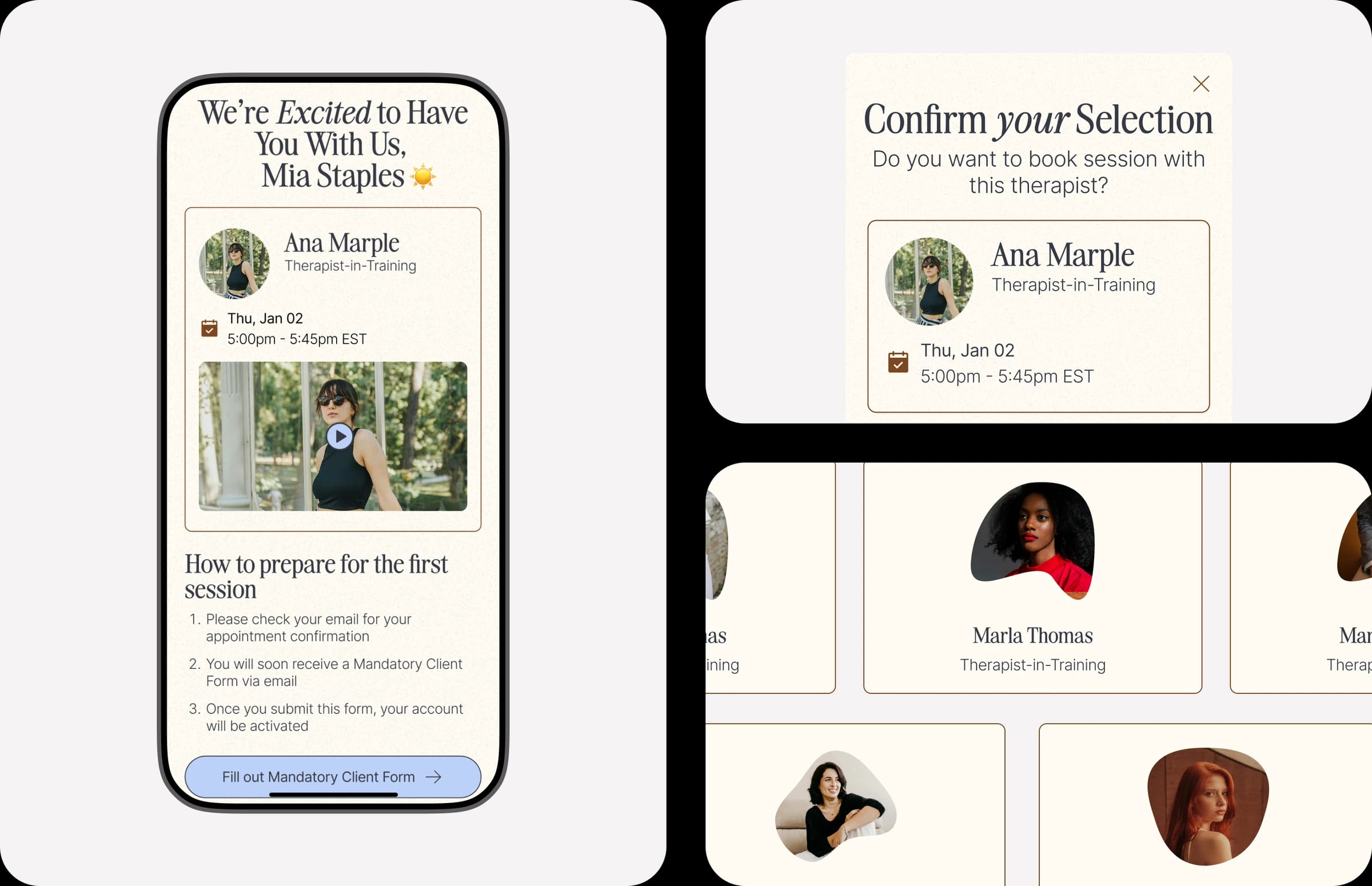
Calendar & Booking Confirmation Screen
After booking, users see a clear confirmation page outlining next steps, including:
- What to expect before the first session
- A button linking to a required onboarding form
- A welcome video from the platform's CEO to build brand trust and emotional safety
Solved problem: Clients had no scheduling flexibility. Now they self-book, with clear next steps after confirmation.
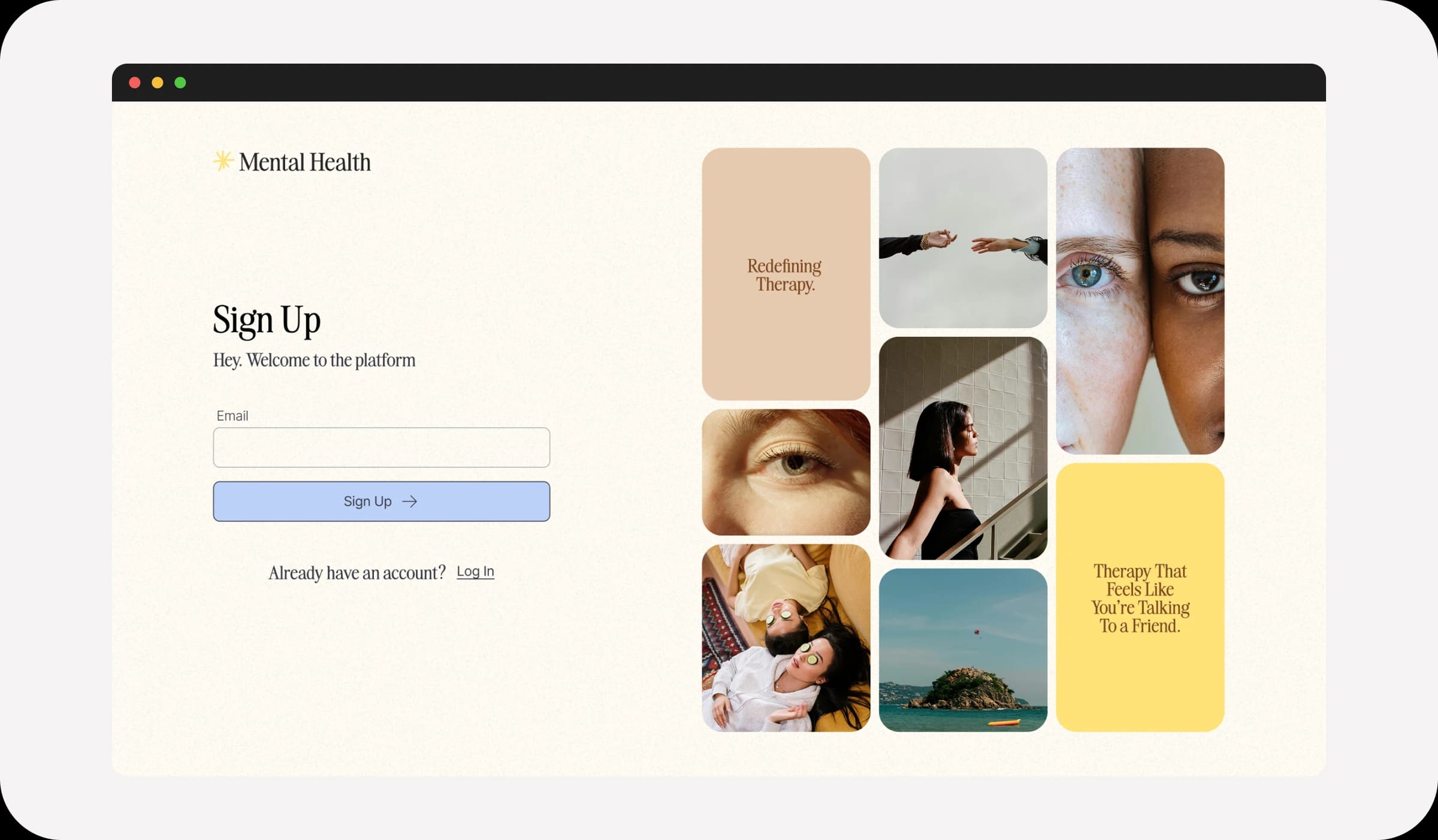
Visual Identity Refresh
Alongside the product work, I defined a new visual direction for the platform. The key challenge: the stakeholders wanted a retro aesthetic with vintage elements and grainy textures, unconventional for mental health, where most products default to clean, clinical looks.
I explored the direction through moodboards and stakeholder workshops, landing on:
- Vintage-inspired typeface
- Carefully edited photography
- Hand-drawn illustrations
- Grainy textures
- Warm palette (yellow, beige, brown) with sky blue accents
The result was a brand book used across product, web, and marketing.

Outcome
Part 2 — EHR & Web Portal
Overview
Alongside the matchmaking redesign, we started working on another critical challenge: replacing the client's current internal EHR system. At that moment, they were using a third-party platform customized to their needs. However, several issues made it clear that the system could no longer scale with the business:
- High cost per therapist seat
- Overloaded interface
- Poor usability and outdated interface
- Low adoption of the patient portal
- Technical limitations and integration issues
Research
Understanding the Domain and Stakeholder Context
EHR systems can be built from scratch or based on templated solutions. We explored existing platforms and customization options, but after several Q&A sessions with stakeholders and careful analysis, we decided to go with a custom-built system. The existing template-based solution had already led to many of the current issues, and we wanted to avoid repeating them.
User Interviews
With a tight timeline and competing priorities, getting dedicated research time required active advocacy. The insights it surfaced shaped the final solution.
To understand how people interacted with the current system and what the new solution should offer, we conducted six in-depth interviews with:
- 3 therapists
- 3 supervisors (2 of them also served as therapist coordinators)
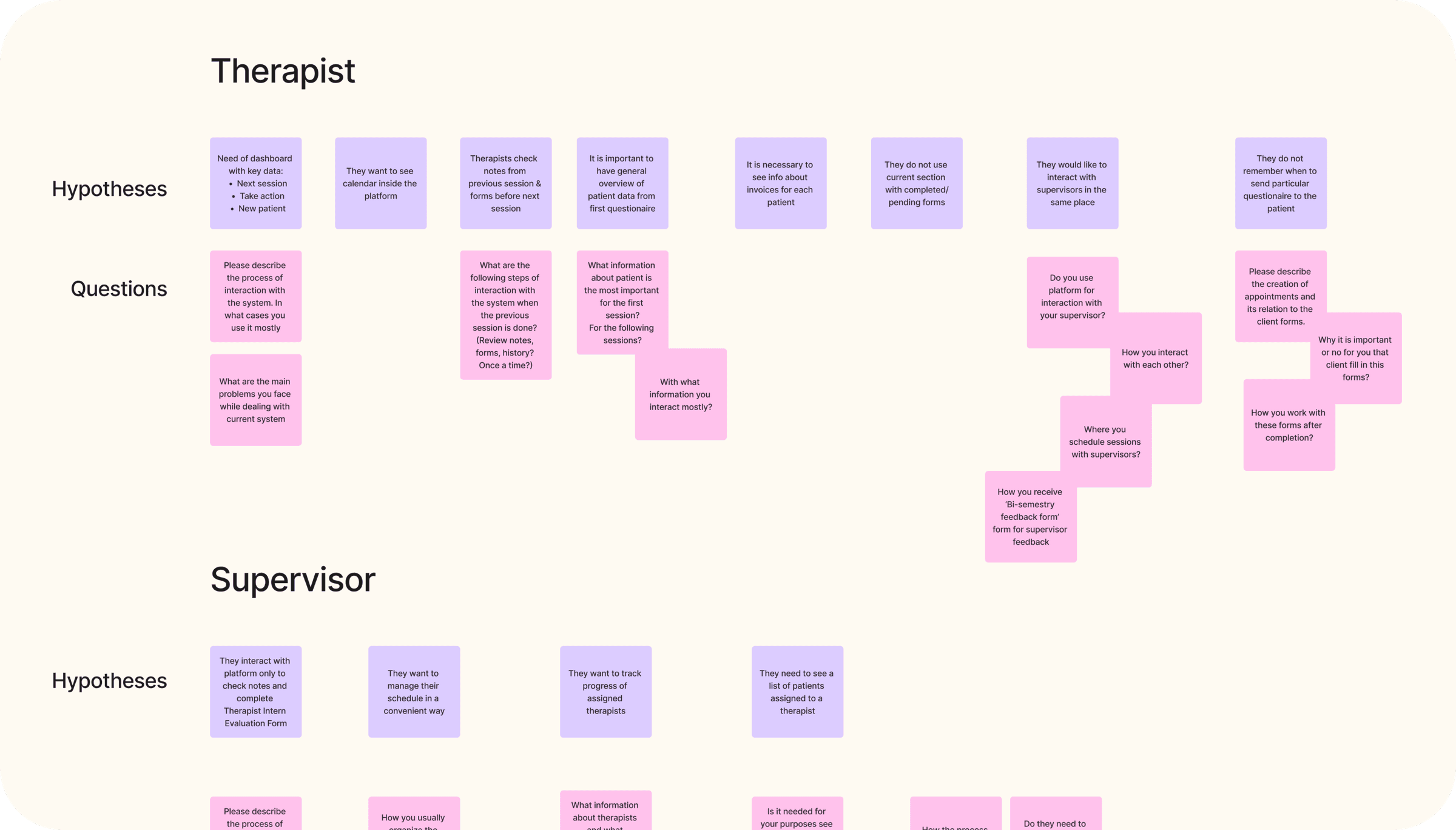
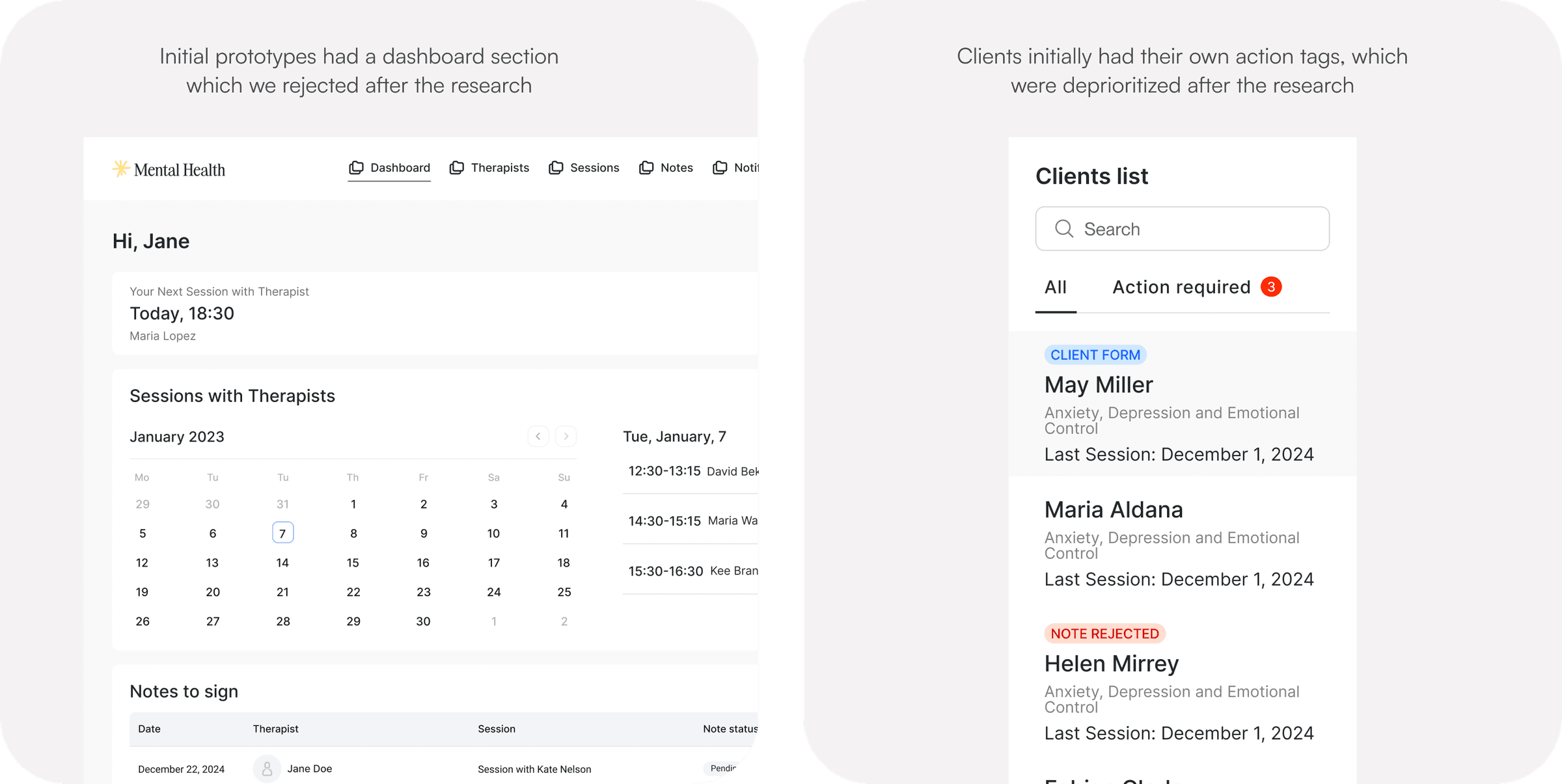
Hypotheses confirmation
Therapists need a centralized client overview. They were switching between multiple sections to find basic info
Supervisors' primary task is reviewing and signing notes, and they had no efficient way to track pending signatures
Therapists forget when to send forms, but the issue was manual process, not reminder timing
Dashboard concept was validated, but not all proposed sections were useful, so we scoped down
Internal calendar was unnecessary. Therapists preferred their existing external tools for scheduling
Whether to research at all under a fixed timeline
Considered
Start designing immediately
The timeline was tight and stakeholders had a clear picture of what they wanted, including a dashboard and a built-in calendar.
Chose
Run 6 interviews first
I mapped hypotheses per role, then interviewed therapists and supervisors. The research cut the dashboard down and disproved the calendar, which developers had estimated at around three weeks of build.
These findings shaped the final scope: centralized overviews per role, streamlined note signing, automated form delivery, and no built-in calendar.
Design Decisions
| Decision | Rationale | Hypothesis |
|---|---|---|
| Centralized session overview | Therapists were switching between three or more tools. Now one view with all session data. | Confirmed #1 |
| Streamlined note signing | Supervisors' primary task was buried in the old system. Made it the default view. | Confirmed #2 |
| Automated form delivery | Manual reminders were unreliable. System now triggers forms at the right time. | Partial #1 |
| No built-in calendar | Research disproved the need. Developers estimated it at around three weeks of build. | Disproved #1 |
Centralized session overview
Confirmed #1
Therapists were switching between three or more tools. Now one view with all session data.
Streamlined note signing
Confirmed #2
Supervisors' primary task was buried in the old system. Made it the default view.
Automated form delivery
Partial #1
Manual reminders were unreliable. System now triggers forms at the right time.
No built-in calendar
Disproved #1
Research disproved the need. Developers estimated it at around three weeks of build.
Screens
Wireframing & Visual Design
Wireframing and Design System Expansion
The EHR system required three distinct permission levels, so I mapped therapist, supervisor, and admin workflows before designing any screens.
The system spanned web, mobile, and an EHR platform, each serving therapists, supervisors, and admins with role-specific permissions.
Since we had already defined the visual language in the first project phase, I continued developing and applying the same design system. Consistency was crucial, not just from a branding perspective, but also to deliver a unified and user-friendly experience to therapists and supervisors.
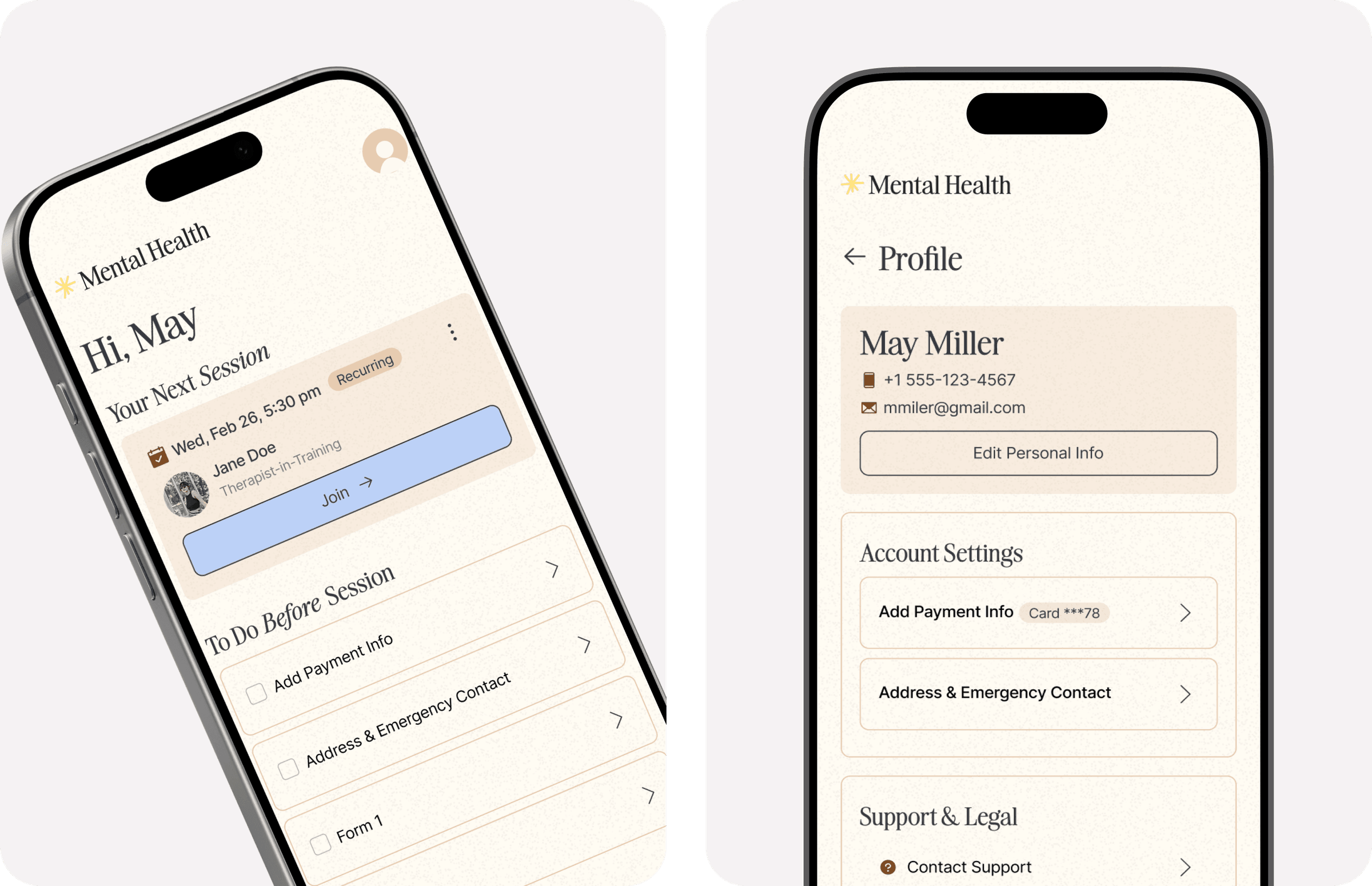
Web App for Patients
The patient platform was created with a focus on clarity and accessibility.
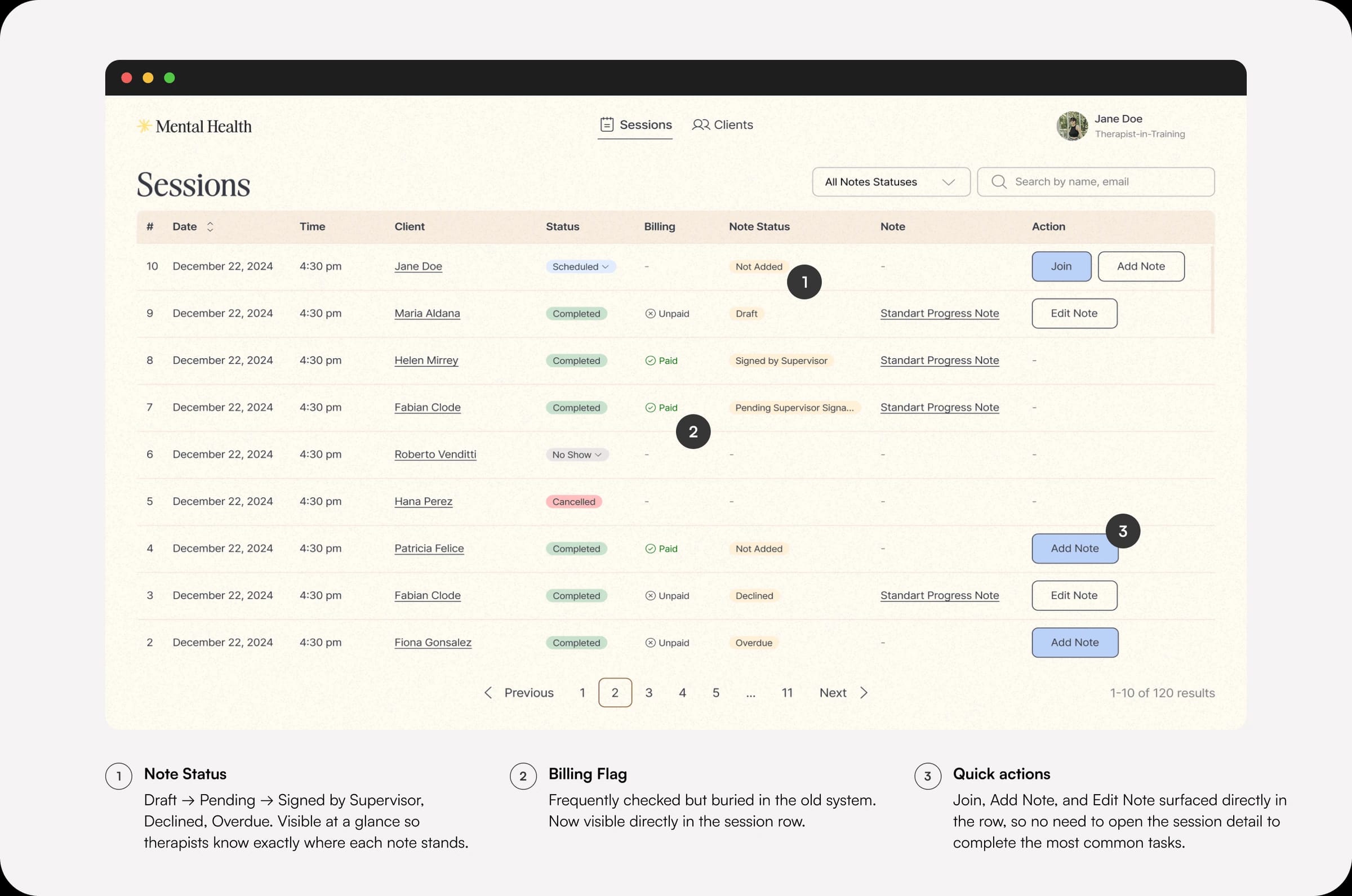
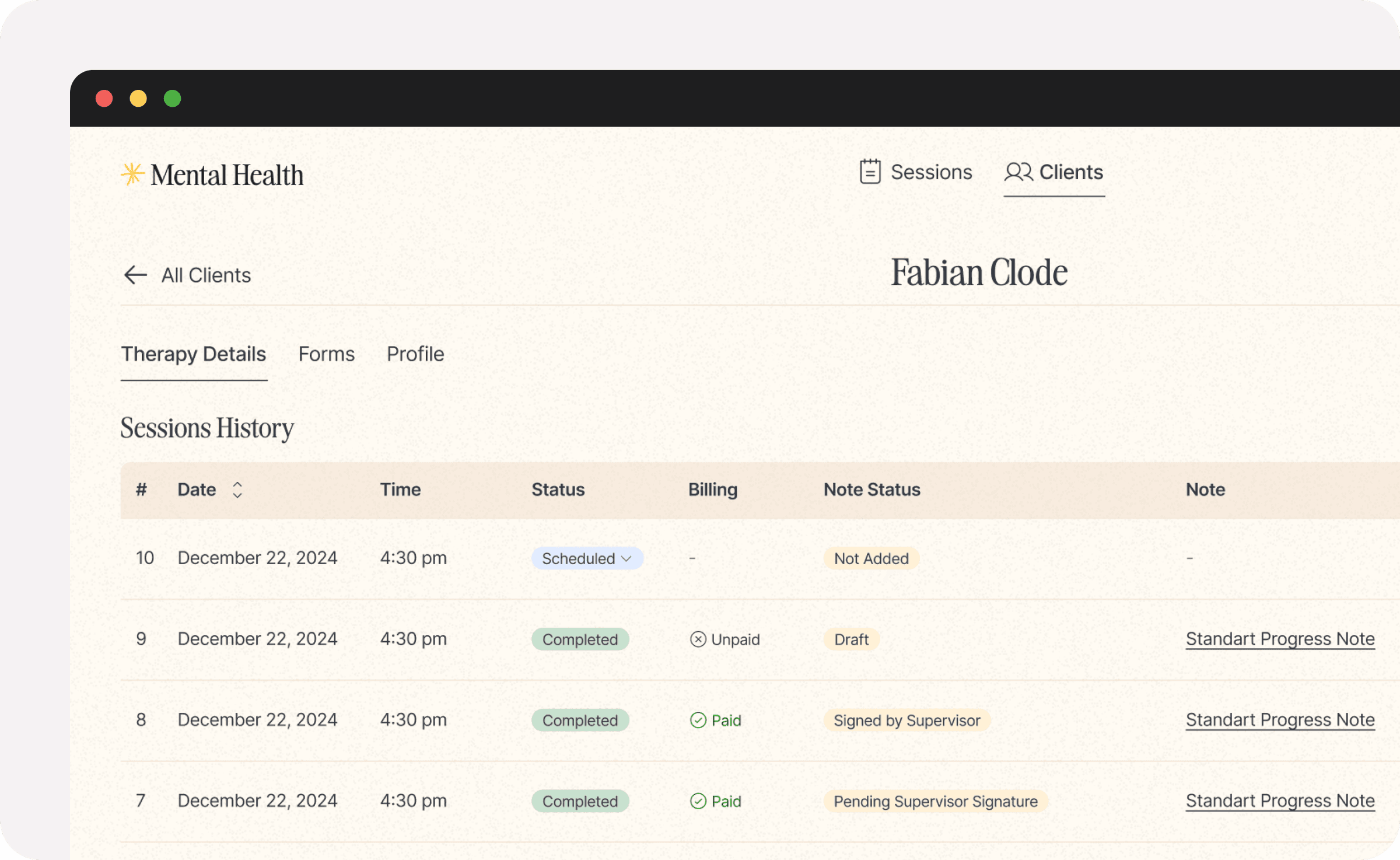
Session Management for Therapists
Research showed therapists were switching between 3+ tools to piece together their daily schedule. This view consolidates everything into one screen: upcoming sessions, client names, note status, and actions, so therapists can start their day without opening anything else.
Client Overview
Therapists lacked a centralized view of their patients. Basic info was scattered across multiple sections. This overview surfaces only what therapists told us they actually check: contact details, diagnosis, session history, and pending forms.
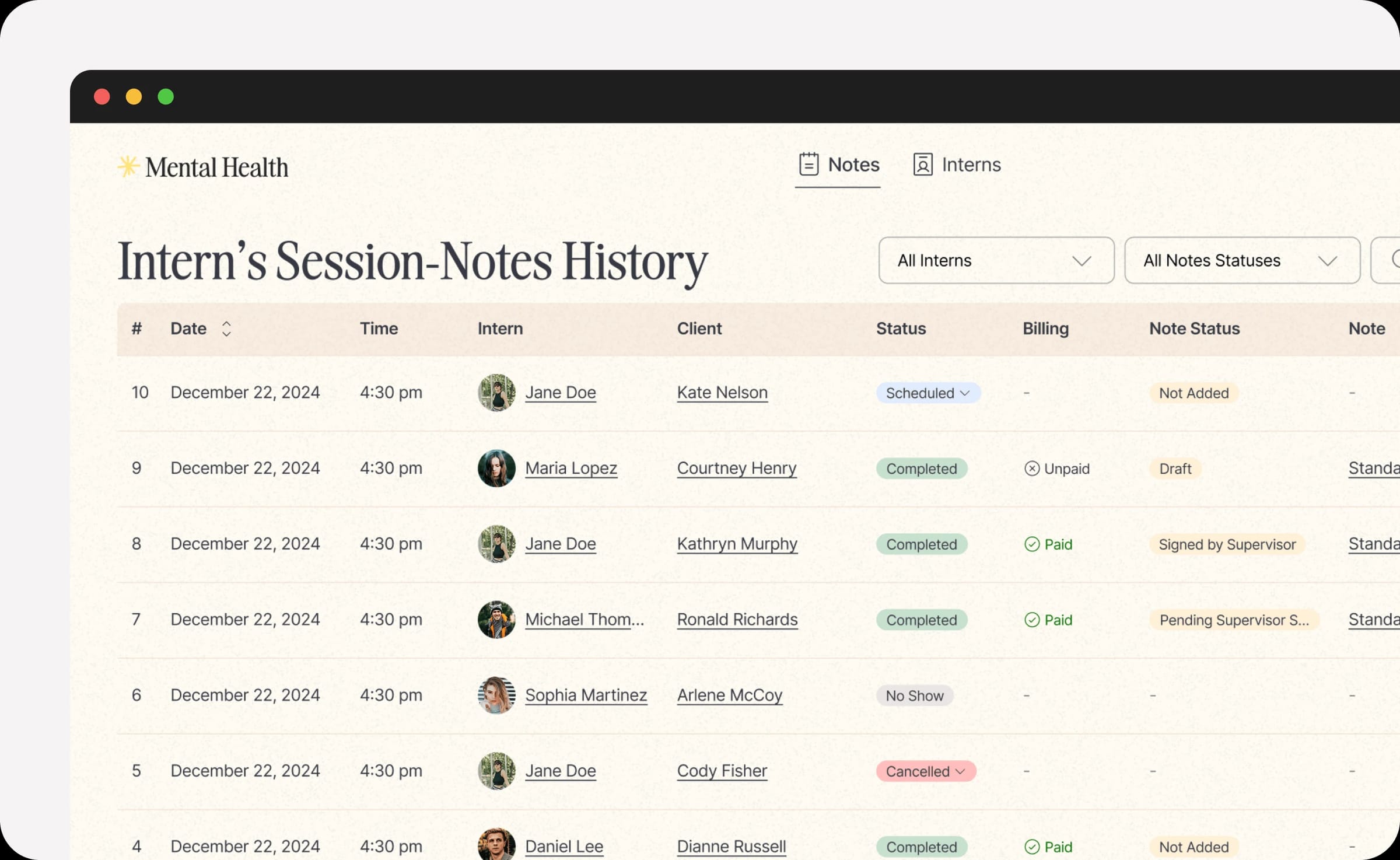
Notes Management for Supervisors
This was the biggest pain point from research. Supervisors' primary task is reviewing and signing session notes, but they had no way to see which notes were pending. This view surfaces unsigned notes first, with filters by therapist, date, and status.
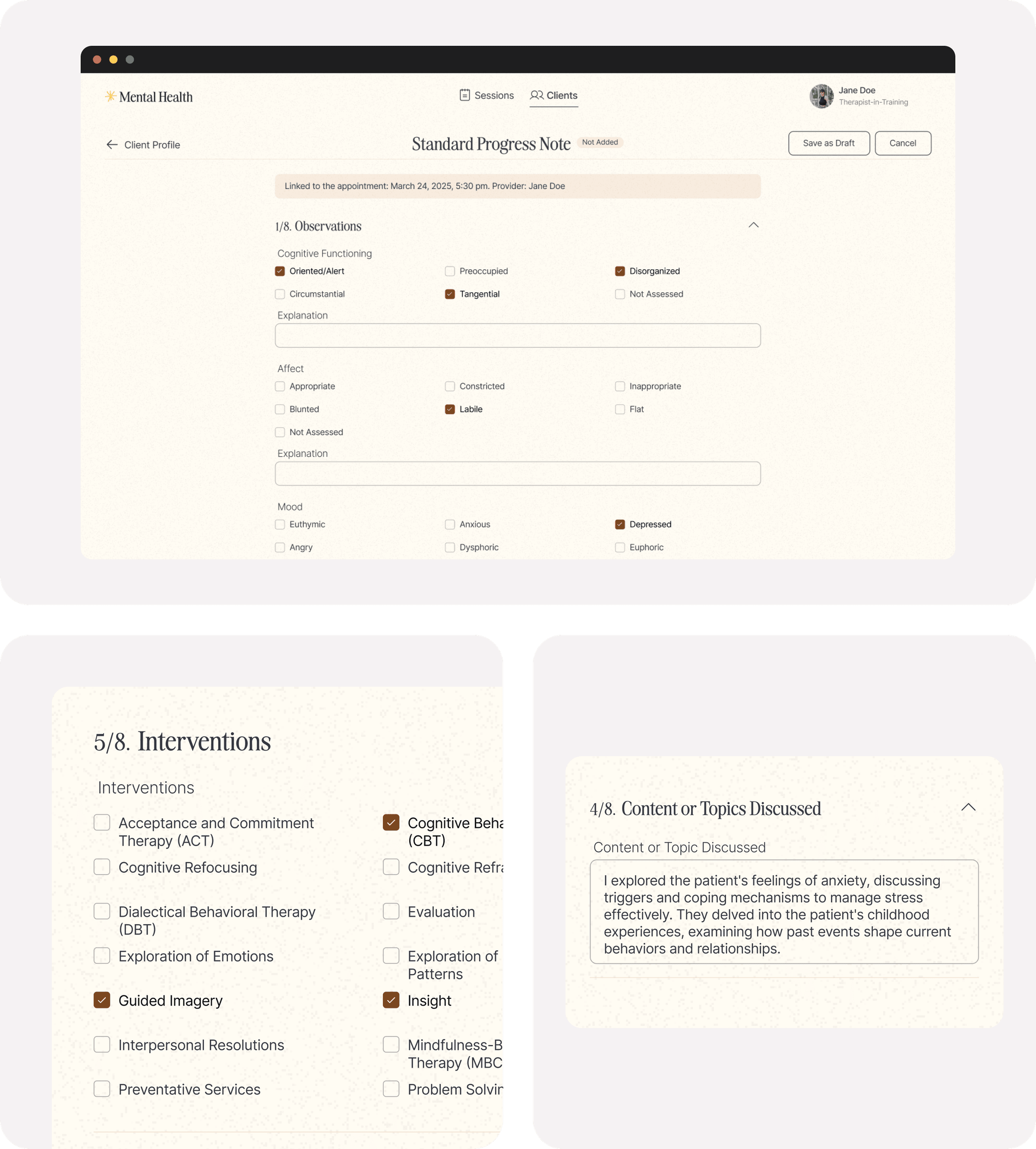
Note Creation and Signing
The clinical note form was redesigned around what therapists actually fill in. We removed unused fields, grouped related inputs (observations, affect, mood), and structured the form to match how therapists think through a session, not how the old database organized the data.
I also designed patient forms, admin tools, and internal workflows, 60+ screens in total.
Results
Other Works
Foodtech · ERP · B2B · Web + Mobile
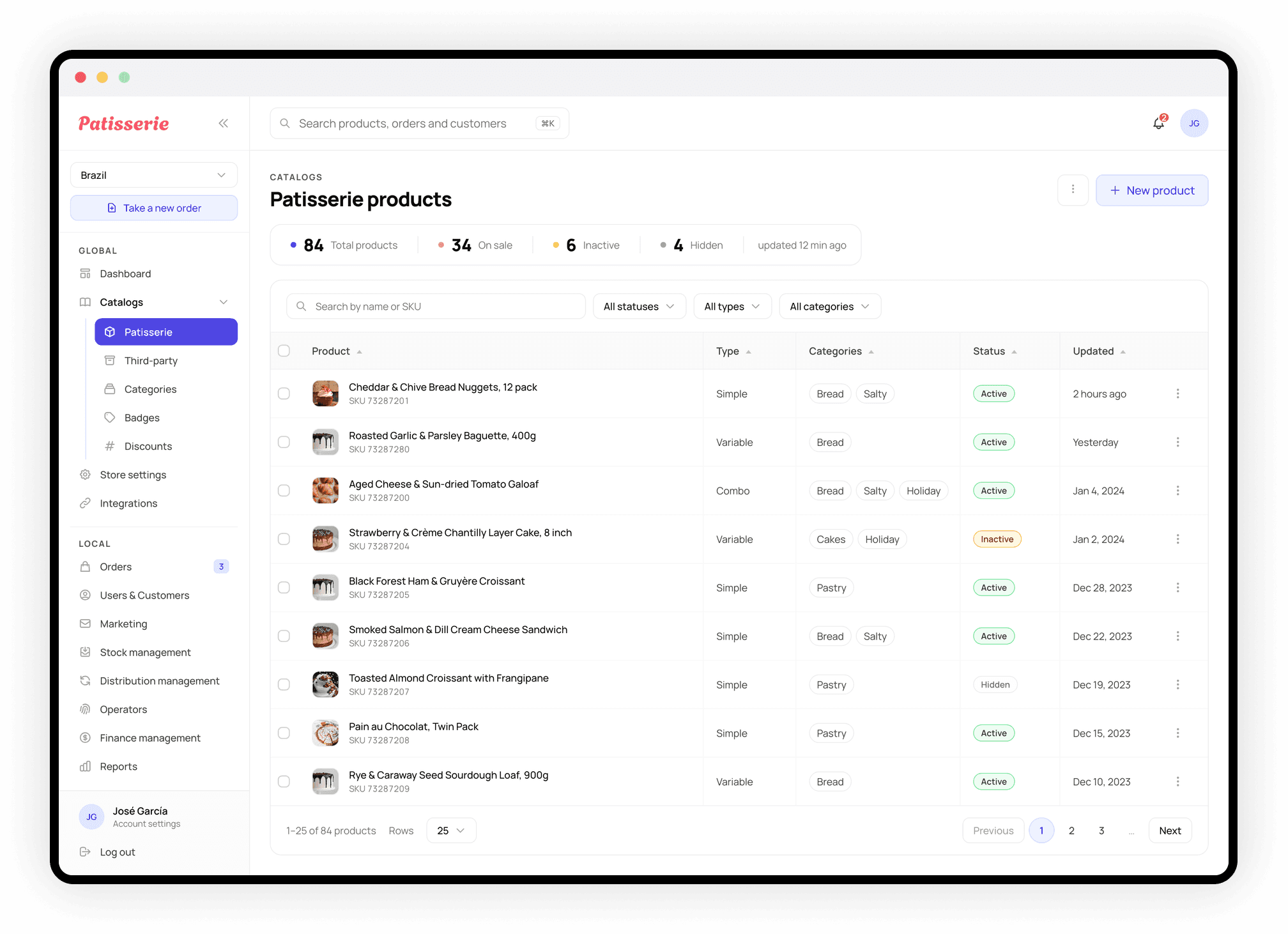
B2B Platform for a Multi-Country Franchise
A bakery franchise across 4 countries outgrew its basic admin panel. Over 2 years I turned it into a full ERP, 15+ modules, as the only designer.
Foodtech · Marketplace · B2C · Mobile + PWA
Global Fast-Food App Redesign
UX/UI overhaul of a delivery app and PWA serving 2M+ users across Central America.